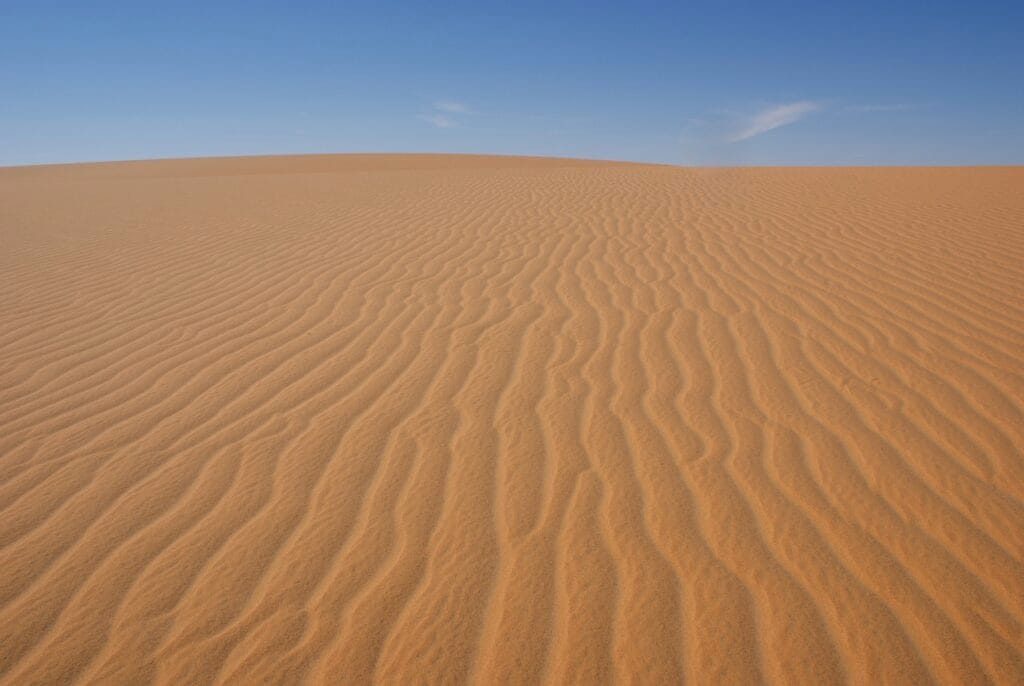

Back in 2002, during my years living in Cairo, I fulfilled one of my greatest dreams — a journey deep into the Western Desert of Egypt, to the legendary Gilf Kebir Plateau. Even today, Gilf Kebir remains a symbol of the last true adventures in the Sahara Desert. Although around ten to fifteen expeditions head there each year — some even continuing further south to Gebel Uweinat — this region is still among the most remote, arid, and untouched landscapes on Earth. Today desert trips into this deserted area are completely prohibited by the Egyptian authorities.
The Gilf offers much more than isolation. It’s a place where you encounter Stone Age rock art, dramatic sandstone formations, traces of World War II expeditions, and above all, the overwhelming sense of silence and solitude that defines the Sahara’s vastness. For me, this trip was not just a desert expedition — it was the highlight of my years in Egypt, and at the same time, a farewell to friends and a chapter of life that ended with the sound of the desert wind.
Our 14-day journey covered nearly 2,000 kilometers off-road, through some of the harshest yet most beautiful desert terrain imaginable. We traveled with two diesel Land Cruisers, two petrol vehicles (Land Cruiser and Pajero), and 14 participants in total.
The team was led by legendary desert drivers:
- Peter “Yalla” Gabalah “The Desertfox” with his legendary Oyota – please forgive me Peto 🙂
- Lushi from Bahariya
- Hamdi “The Singing Bedouin” from Farafra
Route:
Maadi – Cairo – Bahariya – Farafra – Abu Minqar – Gilf Kebir – Libyan Desert Glass strewn field – Great Sand Sea – Abu Minqar – Farafra – back home to Cairo.
A true expedition into timeless silence — and a memory that still defines my passion for the desert, stones, and the spirit of exploration.


Spring Winds and Desert Dreams — The Start of Our Gilf Kebir Expedition
(Cairo – Bahariya – Farafra – Western Desert, Egypt)
It’s springtime in Cairo — the season of the Khamsin winds, when the sandstorms begin to dance across the desert. Despite that, it’s the perfect time for an expedition: warm, golden days and wonderfully cool nights. Well-prepared and planned down to the smallest detail, our Gilf Kebir adventure begins under the leadership of Peter — one of Cairo’s top desert expedition guides.
At 6:00 a.m. in Maadi, the team gathers. After a short fuel stop, we drive nonstop to Bahariya Oasis, the gateway to the Western Desert. At Bayoumi’s, we enjoy the traditional breakfast of ful beans and other local favorites — fuel for the road ahead.
Soon after, Lushi and Sabeka join us — both lifelong desert experts. Lushi, owner of a tire repair shop, will prove to be one of the most essential team members over the next two weeks. His off-road skills will save us more than once. Sabeka, our backup driver, is always ready to take over and, most importantly, brings along a treasure trove of black olives preserved in oil, fresh dates, and Bedouin crackers.
In Hamdi’s diesel Land Cruiser — with its leaky jerrycans and endless laughter — we have the liveliest vehicle of the entire expedition. It quickly becomes known as the “Party Cruiser” of our desert convoy.
Upon arrival in Bahariya, we meet with the State Security and Border Patrol liaison officers. After hours of waiting, the long-awaited approval from Cairo finally arrives. Everything west of the main oasis road is technically military-restricted territory, and special permits are required to enter. Before heading deeper into the White Desert, we must also pick up a military liaison officer in Abu Minqar, who is officially tasked with ensuring that we don’t cross into Sudan or Libya. Most of these officers have never been more than a few kilometers into the desert, but they’re part of the adventure.
Some areas along the Egypt–Sudan–Libya border still contain minefields left by smugglers and World War II battles, but with careful planning and local knowledge, we safely navigate through.
We stand at the beginning of a great expedition — hundreds of kilometers of untouched wilderness before us. The Western Desert of Egypt remains one of the last true challenges in the Sahara. Soft sand, rocky passes, and unpredictable weather test not only the people but also the vehicles. Preparation and respect for the desert are essential. Hundreds of liters of fuel, water, and food are distributed across our four 4x4s, and crossing dunes with fully loaded vehicles is no small task.
With temperatures around 28°C, Cairo and Bahariya are in bloom. Spring brings the desert to life — flowers, shrubs, and acacia trees showing their first colors. It’s finally time to leave Cairo behind.
After our traditional rest stop in Bahariya, we continue on to Farafra. That evening, the cars are repacked, the water tanks refilled, and we enjoy the last shower for the next 14 days.
In Farafra, we reunite with Hamdi, Saad, Atef, Dr. Socks, and Badr — our desert companions — at the Badawiya Safari Hotel. The spirit of adventure fills the air. Tomorrow, we head deeper into the unknown.

Day 1 – From Farafra to Abu Minqar: Into the Sands of the Western Desert
(Monday, March 11, 2002 – North of Regenfeld)
It’s 7:00 a.m. in Farafra Oasis, and the desert greets us with an unexpected surprise — the temperature has dropped, and strong winds carry clouds of dust and sand across the horizon. A small sandstorm sweeps through Farafra, and we delay our early departure, hoping (Inshallah) the weather will soon calm.
Our planned route for the day covers about 150 km on asphalt toward Dakhla, followed by 50 km of open sand heading southwest, to reach the Regenfeld area the next day. Most Gilf Kebir expeditions take the longer route via Dakhla and Mut before turning west toward Abu Ballas, but thanks to Peter’s experience and navigation skills, we decide to take a shorter, riskier off-road route — saving nearly an entire day.
By mid-morning, the wind is still blowing hard, visibility is down to just a few hundred meters, and the fine desert dust seeps into everything. My camera is double-wrapped in plastic bags, but even that can’t fully protect it from the Sahara’s persistence.
Finally, at 10:30 a.m., the wind settles enough to start our engines. The convoy of four fully loaded 4x4s rolls south — another 100 km of asphalt to Abu Minqar, where we make one last tea stop and meet Mohamed, our assigned Egyptian army officer. It’s hard to tell if he realizes what kind of journey he’s about to join.
By early afternoon, we leave the tarmac behind — the last paved road we’ll see for nearly two weeks. The landscape flattens as we enter the northern fringes of the Great Sand Sea, heading toward Regenfeld. The vehicles handle beautifully across the dunes; even fully loaded, we make steady progress, crossing five or six dune ridges before the first camp.
Along the way, we make a fascinating discovery: scattered across the base of a dune lie hundreds of ostrich eggshell fragments, half-buried in the sand — remnants of ancient life in a region that’s now one of the driest on Earth. The scratches on the inside of the shells suggest they were used thousands of years ago by prehistoric nomads, who carried ostrich eggs as portable sources of protein and water through what was then a savanna-like landscape.
By 5:00 p.m., we reach our first camping spot, about 70 km northeast of Regenfeld, near a line of small dunes. The wind still blows through the night, but the sky clears beautifully, revealing a star-filled desert sky. We share stories over tea, the air cool and calm at last. Around 10:00 p.m., under a million stars, we crawl into our sleeping bags — our first night deep in the Western Desert of Egypt.


Day 2 – Regenfeld to Abu Ballas: Across the Sands of Time
(Tuesday, March 12, 2002 – Western Desert, Egypt)
At 7:00 a.m., the first rays of sunlight rise over the dunes. Getting up is easy — the sky is clear, the wind has calmed, and the air feels fresh. Perfect desert weather. After our first proper desert breakfast — baladi bread, tomatoes, cream cheese, jam, and hot coffee — we set off around 8:30 a.m.
The dunes begin to flatten as we move on, but the morning starts with a short delay: the alternator on Peter’s Land Cruiser needs to be replaced. By 11:00 a.m., we leave the dune belt behind. The terrain becomes rockier and flatter, with only two quick recoveries using the sand ladders. Around midday, Hamdi’s vehicle gets its first flat tire — fixed in just 10 minutes. A true “professional tire service in the middle of nowhere.”
By 1:30 p.m., we reach Regenfeld — a lonely cairn of stones still visible from far away. It was here, about 100 years ago, that the German explorer Rohlfs abandoned his attempt to cross the Great Sand Sea to Siwa Oasis. During his expedition, rain fell here — rare enough that the name Regenfeld (“Field of Rain”) was born.
Scattered around are old Shell fuel cans from World War II, their metal polished smooth by the sand, and rusted food tins, silent witnesses to the desert’s long human history. We rest for half an hour, enjoying tuna sandwiches, cheese, and cold beer — our simple lunch in one of the most remote places on Earth.
Our next destination lies about 90 km to the south — Abu Ballas, the legendary “Father of Pots.” The route becomes progressively flatter, and at times, we’re driving over 80 km/h across open desert. By 4:00 p.m., we arrive. The once majestic pile of ancient clay jars has weathered many expeditions, but hundreds of pots still remain, many remarkably well preserved. Were they filled with water or wine? No one knows for sure. Some believe Abu Ballas was an ancient caravan water depot, others suggest a smuggler’s cache along a lost trade route.
The wind picks up again, sweeping sand endlessly across the open plain. We’ve clearly lost altitude — descending plateau by plateau deeper into the Sahara’s heartland. The landscape changes every half hour, offering breathtaking views at every turn.
We set up camp around 5:00 p.m., nestled in a small rocky hollow between two hills to shelter from the northern wind. The 4x4s are parked in a row to form a natural barrier. Before dusk, I wander off to explore and find beautiful sandstone formations, naturally painted by wind and minerals in shades of green, yellow, orange, and ochre. In the light of the setting sun, the rocks glow like fire — reminding me of the Colored Canyon near Nuweiba on the Sinai Peninsula. Nature’s own art gallery, carved and painted by wind, sand, and time.
Unfortunately, the film in my camera runs out just as the light fades. Back at camp, I take a quick “desert shower” with wet towels — it’s amazing how refreshing it feels. Then comes a cold beer, a cigarette, and the quiet satisfaction of another successful day. We’ve covered 200 kilometers — a strong start.
Night falls over our camp. The sky is crystal clear, filled with countless stars. Under flashlight, Lushi repairs Hamdi’s tire, proving again why he’s indispensable. Around 8:00 p.m., we gather for dinner by the fire. After a few Sakkara beers, Hamdi picks up his djembe drum, and music echoes across the dunes.
By 11:00 p.m., the desert grows silent — even the fennec fox prowling around our tents slips quietly into the night.


Day 3 – Abu Ballas to Wadi el Bakht: Gateway to the Gilf Kebir Plateau
(Wednesday, March 13, 2002 – Western Desert, Egypt)
We start around 8:30 a.m., heading steadily toward the Gilf Kebir Plateau. The wind has eased again, and the sky is a deep blue, as it so often is in this vast desert. After just 20 minutes, we reach our first remarkable site — the Mud Fins. Formed from ancient lake sediments, wind and sand have sculpted these shark fin-shaped ridges, each two to three meters high, all perfectly aligned. The formation stretches about 300 by 300 meters — a surreal landscape of red and grey tones shaped entirely by nature.
For two hours we travel through sand, stone, and gentle rolling hills, the landscape gradually flattening again. Suddenly, in the middle of this endless sand plain, we come across a French route marker — a relic from one of the early Renault Africa expeditions, reminders of the age when pioneers first attempted to cross the Sahara.
After another three hours of driving, the Gilf Kebir Plateau appears faintly on the horizon — the first outlines of this monumental highland. By midday, we enter undulating terrain, where the sand glows in shifting hues of grey, yellow, and red. We stop for lunch beside another set of “Shark Fins.” There’s no shade, and the 30°C heat feels far warmer under the relentless sun, though a light breeze makes the stop pleasant. We’ve covered 130 kilometers since morning; another 60 and we’ll reach Wadi el Bakht by late afternoon.
Before entering the wadi, we visit a World War II–era British airstrip. The site is littered with rusted Shell Aviation fuel cans, the old shell logo still clearly visible on many of them. Nearby, Hamdi discovers a prehistoric grinding stone, once used by desert dwellers to mill grain thousands of years ago.
Soon after, we drive into Wadi el Bakht — a valley about 400 meters wide at its entrance. After 20 kilometers, a massive dune blocks further passage — the perfect place to camp for the night. Long ago, a lake once filled this basin, making it an ideal home for prehistoric life. Scattered across the valley floor lie thousands of stone tools, arrowheads, and grinding stones, silent witnesses to a thriving settlement that once stood here. The Gilf was not always as barren and lifeless as today — it was once a green refuge teeming with wildlife.
Even now, antelopes and the elusive Waddan (a wild mountain goat) still inhabit the region. We find two sun-dried Waddan skulls, proof that life, however rare, persists in this isolated wilderness.
The place is stunning — pure desert beauty, silence, and perfect weather. From the top of the dune, I take in a breathtaking panoramic view and capture countless photos. Today, we’ve covered over 200 kilometers; we are now 470 kilometers west of the Egyptian Oasis Road, deep in one of the remotest corners of the Sahara.
As night falls, the temperature drops sharply. For the first time, I reach for my “stinking” camel-hair blanket, unmatched for warmth in the cold desert night. As always, I sleep under the open sky, exposed to the wind but rewarded with a canopy of stars above — a small price for the privilege of this desert freedom.


Day 4 – From Wadi el Bakht to the Prince Kemal el Din Monument
(Thursday, March 14, 2002 – Gilf Kebir Expedition, Western Desert, Egypt)
Another beautiful day in the Sahara begins. The sky is an endless deep blue, and the air perfectly still.
We set off later today — around 10:00 a.m. — giving us time to further explore the Wadi el Bakht area. With every step, we discover new Stone Age artifacts, scattered across the sand. Arrowheads, grinding stones, and even a fragment of Libyan Desert Glass — a clue that prehistoric people once collected this rare silica from faraway sites and worked it here into tools and weapons.
By the time we depart, the heat is already intense. Today’s route will take us roughly 100 kilometers southwest, toward the Prince Kemal el Din Monument, built by László Almásy in honor of the great Egyptian desert explorer.
At first, we follow the southern foothills of the Gilf Kebir Plateau, crossing fields of low stone ridges and dunes. Soon, the terrain opens into a vast, flat sand plain that stretches to infinity. Around midday, we reach “Eight Bells”, a site named by the British during World War II after the eight surrounding hills. Using hundreds of empty Shell fuel cans, soldiers once spelled out “8 Bells” in the sand — a massive signal for pilots landing in the desert. A giant arrow made from the same cans still points toward the makeshift airstrip. Scattered around are rusted tins, shell casings, and relics dated 1939–1941 — time capsules from the war, now half-buried in sand.
We stop for lunch atop a small rise overlooking the desert, before continuing around 3:00 p.m. toward the Kemal el Din Monument. The landscape is flat again, punctuated by surreal rock formations shimmering like floating islands in the heat haze. Mirages dance on the horizon — vast “lakes” of light that vanish as we approach.
As evening falls, we set up camp near a sandstone ridge, overlooking the vast emptiness of the Western Desert. The sun sets behind the southern escarpments of the Gilf Kebir, painting the horizon gold and violet. The wind has died completely; the silence is absolute. The cars are running perfectly, and so far both man and machine are adapting well to the extreme dryness — humidity often below 20%.
At the campfire, we make a small but tragic discovery: the beer supply is running low. Desert problems! So we invent a new drink — the “Turbo Chai”, a mix of mint tea and a generous shot of whiskey. Spirits rise quickly. Hamdi brings out his drum, and under a canopy of stars, the desert party begins. Music, laughter, and the crackle of the fire carry into the night — the kind of simple joy only the desert can offer.
By 11:00 p.m., the camp grows quiet. The air is cool, the stars sharp and endless.
Another unforgettable night deep in the heart of the Gilf Kebir.


Day 5 – From Prince Kemal el Din Monument to Wadi Sura (Cave of the Swimmers)
(Friday, March 15, 2002 – Gilf Kebir Expedition, Western Desert, Egypt)
Our route today takes us from the Prince Kemal el Din Monument, past the Aqaba Pass, all the way to the legendary Wadi Sura — home of the Cave of the Swimmers, made famous by the movie “The English Patient.” Visiting this site is almost a rite of passage for any true Gilf Kebir expedition.
We drive across endless sand plains, the landscape stretching beyond the horizon. Along the way, we stop at the rusted remains of a truck from the 1940s. Not much is left — just a decaying frame, half-buried in sand. Hamdi, always the optimist, tries to dig out the old fuel tank, thinking it might still be useful. After ten minutes of effort, he gives up, laughing. Probably for the best — what would we do with it out here anyway?
Around midday, we reach the Three Castles — three isolated stone hills standing silently in the desert, north of the Gilf Kebir escarpment. The heat is intense and the air still. After a quick lunch and some shade beneath the Land Cruisers, we move on at around 2:00 p.m. Two hours later, we arrive at Wadi Sura.
From a distance, the Gilf Kebir Plateau rises like a colossal wall — nearly 300 meters high, a monumental presence in the middle of the Western Desert. As we get closer, the flat facade breaks into deep ravines and narrow wadis, carved by ancient floods and wind over millennia.
We visit the Cave of the Swimmers, where ancient rock art has survived thousands of years under a natural overhang, shielded from the blazing sun. The paintings — though fading and flaking — remain astonishingly vivid. Figures of humans and animals painted in red ochre: antelope, giraffes, buffalo, and other creatures from a time when this land was lush and green. The Sahel Zone once stretched far north of its current borders — hard to imagine as we stand in this barren, silent desert.
We set up camp near the cave, surrounded by surreal sandstone formations. Before sunset, there’s time to explore the surrounding canyons, climbing over dunes and weathered rocks shaped by wind into natural sculptures. The silence is total, broken only by the crunch of boots in sand.
As dusk settles, something unexpected — life. We spot four dragonflies, darting in the fading light. How do they survive out here, hundreds of kilometers from water? Yet, it makes sense — during rare rains, water gathers in rock basins, lasting for months under the shade of towering cliffs. Life in the desert finds a way.
As night falls, the sky clears, revealing a dome of brilliant stars. A light wind picks up, whispering through the canyons. The campfire flickers, the tea brews, and we sit in quiet awe — surrounded by timeless desert beauty and the mystery of ancient civilizations that once thrived where now only sand remains.


Day 6 – From Wadi Sura to the Gilf Kebir Plateau
(Saturday, March 16, 2002 – Gilf Kebir Expedition, Western Desert, Egypt)
The morning begins with a surprise — not just insects this time, but an entire pigeon flying over our camp. Proof, perhaps, that somewhere in the maze of Gilf Kebir canyons, there’s still water hidden in shaded pools. Unfortunately, we don’t have time to search. How amazing it would have been to dive into a hidden desert pool, just like the ancient swimmers depicted in the rock art of Wadi Sura.
We head west, closer to the Libyan border, now only a few kilometers away. Our escort officer, Mohamed, clearly has no idea where we are — but that’s fine. We have no plans to cross into Libya anyway. On the edge of a cliff, we stumble upon another World War II desert camp. Nothing much remains — just scraps of wood and rusted metal. A broken bottle of Asbach Uralt cognac, with its old Gothic German lettering, hints that this must have been a German military outpost. Maybe Count László Almásy himself once stopped here for a drink — or perhaps the English or Italians “liberated” the bottle later. The desert keeps its secrets.
The landscape is breathtaking — surreal rock formations scattered across a rough, stony plain. After a short break, we turn east, following the southern edge of the Gilf Kebir Plateau toward the Aqaba Pass — the only natural route to climb onto the high plateau from the south.
Just before reaching the sandy slope, another flat tire — this time on Theo’s vehicle. But the team is fast: ten minutes later, we’re back on track. At 1:00 p.m., all vehicles successfully crest the Aqaba Pass. The last section is deep sand, demanding full concentration and skill. Everyone makes it up on the first try — except Hamdi. His diesel engine overheats, forcing a brief rest three-quarters of the way up. Ten minutes later, he conquers the climb.
We stop for lunch on the plateau, only to find another flat — again, Hamdi’s car. But spirits remain high; after all, we’ve reached one of the most remote and spectacular places in the Sahara.
By 5:00 p.m., we stand on one of the highest points of the Gilf Kebir Plateau. The terrain is demanding — endless dune ridges weave through the valleys, blocking our path like natural fortresses. Windblown dunes cling to the mountainsides, rising steeply against the rocky cliffs. Navigation is tricky, but our radio communication keeps us from driving into dead-end wadis.
The reward is unforgettable: a panoramic view stretching over an ocean of sand and stone. The sense of scale is overwhelming — the true heart of the Sahara Desert.
As the sun sets, the sky explodes in gold and crimson. We sit atop a dune ridge, sharing a bottle of red wine in perfect silence. During a short evening walk, I find a large feather, possibly from a falcon — a sign of life even here. A few days later, we’ll actually see one — a desert falcon gliding gracefully across the Great Sand Sea.
We are now at 1,057 meters above sea level, with the highest point reaching 1,190 meters. So far, we’ve driven 1,000 kilometers off-road — 360 km as the crow flies from the point where we left the last paved road. Standing here, surrounded by absolute emptiness, I have rarely felt so completely free.


Day 7 – From the Gilf Kebir Plateau to Wadi Abdel Malik
(Sunday, March 17, 2002 – Western Desert, Egypt)
The night was magical — no clouds, a soft wind, and for the first time, the moon appeared over the silent plateau. It was pleasantly warm. Today we head northwest, following the dramatic cliff edge of the Gilf Kebir Plateau.
We start around 9:30 a.m., driving first across rugged, stony terrain along the southern escarpment. The view toward the south is breathtaking — on the far horizon, the Gebel Uweinat rises faintly out of the haze. Once we leave the rocky stretches behind, the surface turns flat and smooth. The plateau opens wide and empty, perfect for speed. Our 4x4s roar across the desert at over 80 km/h, leaving long trails of dust floating behind us. Time to roll up the windows again.
It’s about 80 to 100 kilometers to the upper end of Wadi Abdel Malik. To reach the valley floor, we face a challenging descent — a few hundred meters down through soft, red sand, steep and tricky in places, with scattered rocks demanding full concentration. It’s the kind of slope you’re glad you won’t have to climb back up. We decide to set up a base camp in the valley, allowing time to explore its long and branching side wadis the next day.
For the first time in days, we see signs of life — or at least the remnants of it. Dry grasses, withered shrubs, and scattered acacia trees line the wadi. Some still cling to tiny green leaves. It feels like following the ghost of an ancient riverbed.
By 3:00 p.m., we reach the spot where the valley widens dramatically — nearly three kilometers across. Solitary acacias stand scattered in the sand, offering patches of shade alive with ants and desert insects. Their branches still show hints of green. Nearby, I find the skull of a Waddan, the desert ibex that didn’t make it to the next rain. There are also traces of foxes, snakes, and gazelles — proof that the Gilf Kebir still harbors life.
The sand glows a deep red-orange as the sun sets behind the plateau. We make tea under an acacia and set up camp on a small rise overlooking the valley. Hamdi, our singing Bedouin, bakes fresh Bedouin bread in the sand — simple, warm, and better than many loaves I’ve eaten in Cairo. The night is calm, the air soft and dry, and for once, we have plenty of firewood.
Hamdi disappears into the darkness and returns 20 minutes later, towing the remains of a dead acacia tree behind his Land Cruiser. By the time it burns down to glowing embers, it’s close to midnight. The fire must have been one of the largest this wadi has ever seen. Nobody felt cold that night.
As I finally crawl into my sleeping bag around midnight, I notice the wind picking up. At first it’s gentle, but by dawn, it’s howling through the valley. I wrap my sesh (desert scarf) tightly around my head as fine sand starts to sting my face. It turns into one of the dustiest nights I ever spent during my five years in Egypt.
By sunrise, the wind calms briefly — but only for a short while. The desert, once again, reminds us who’s in charge.


Day 8 – Sandstorm over Wadi Abdel Malik
(Monday, March 18, 2002 – Western Desert, Egypt)
The wind only calmed slightly at sunrise. Breakfast was out of the question — the storm roared relentlessly across the width of the valley and swept up our dune with full force. We were completely exposed. Folding up the tents turned into heavy labor. Moments like this remind me why I prefer sleeping under the open sky. Nothing compares to that clear desert night view filled with stars, and I enjoy it every single time.
Once everything was roughly packed, we drove further up the wadi, hoping to find a more sheltered spot. We tried several side canyons, but the wind came from every direction. During a short stop, everyone received breakfast — four biscuits each. Then we turned around and headed back down the valley.
By 11:30 a.m., we reached our previous campsite again. The storm had intensified. One of Hamdi’s car doors had nearly been torn off its hinges, and to top it off — another flat tire. The wind had now turned into a full Sahara sandstorm, sweeping through the valley like a living thing. With enough firewood around, we decided to burn our collected waste and bury the remains deep in the sand — proper desert cleanup, one meter under.
The valley widened once more, opening into flat sandy plains. The air grew dense with dust; visibility dropped to almost nothing. Fine sand infiltrated every crack and crevice — especially in Hamdi’s Land Cruiser, which had more gaps than glass at this point. After about 30 minutes of driving, we turned into a small side valley to wait out the worst of it. Everything was painted in shades of grey; the storm howled, and the sand crawled low along the ground in endless gusts.
Lunch was simple: “Fuul” — Egyptian beans, eaten half-sitting in the sandstorm, our backs against the cars. There was nothing to do but wait. Despite the chaos, there was a strange peace to it. Since we had time, I climbed up a nearby rise and discovered a patch of beautiful colored shale stones, each patterned like miniature maps or tree rings — red, yellow, green, ocher. A natural artwork revealed by erosion and storm. Every desert wind has its bright side.
By late afternoon, around 5:00 p.m., the sky began to clear a little. The far wall of the valley reappeared through the haze. We drove only ten minutes further and stopped on a sandy rise sheltered by two rock outcrops. We parked the vehicles in a row and built makeshift windbreaks using cloths, sand ladders wrapped in blankets, and whatever else we could find.
As the sun set, the wind picked up again. Dinner was sandy — the kind that grinds between your teeth. On the bright side, no one needed to brush afterward. We sat in the swirling wind, laughing at the absurdity of it all. Despite our improvised barriers, fine sand found its way through everything. Eventually, I joined Sabeka and Hamdi inside the car, waiting for food with a mix of whiskey and cigarettes.
That night, I decided for the first time not to sleep outside. Instead, I took refuge in the back seat of Peter’s Toyota. It was hot, cramped, but at least free of sand in the nose, ears, and mouth. Toward morning, the storm finally began to die down — and instantly, the temperature dropped. The silence that followed was almost as striking as the storm itself.


Day 9 – From Wadi Abdel Malik to the Land of Libyan Desert Glass
(Tuesday, March 19, 2002 – The Egyptian Sahara Expedition)
The storm finally calmed overnight, leaving the air crisp and cold — a good omen in the desert. A faint haze lingered, but the visibility was much better than the night before. After nearly 24 hours of chaos, the Sahara winds had subsided. Perhaps the gods of the Gilf Kebir forgave us — or maybe this was payback for the acacia tree that Hamdi turned into firewood two nights ago.
We shared a quick breakfast and began packing at dawn. By 7:30 a.m., our convoy rolled northward through Wadi Gubba, following the far-reaching arms of Wadi Abdel Malik. Before departure, we faced a few mechanical hiccups — Hamdi’s Land Cruiser needed a bit of tightening, and Peter’s Toyota protested against the sand that had invaded every electrical connection. After 20 minutes of dusty repairs, the engines purred again.
The morning was still chilly despite the rising sun, but the air grew clearer by the mile. The landscape unfolded in wide open valleys, rocky stretches, dunes lining the slopes of distant hills, and the occasional lone shrub. Along the trail, a stark reminder of desert life and death — a single dead stork, bleached by the sun, lying beside our track.
We stopped for photos and, for the first time on this expedition, spotted a desert snake sliding silently through the sand. Not long after, we crossed the faded track of the Paris–Dakar–Cairo Rally 2000, a ghostly reminder of other desert travelers before us. At 1:00 p.m., we paused for lunch — tuna, cheese, bread, and laughter under a deep blue sky. A light breeze, a few scattered cumulus clouds, and perfect desert weather.
By mid-afternoon, we left behind the final ridges of the northern Gilf Kebir Plateau. The landscape leveled out — vast, stony plains speckled with dark volcanic rock surrounded by deep red sand. Behind us lay the mountains of Gilf Kebir, and ahead stretched the Great Sand Sea — a boundless ocean of dunes waiting to be crossed.
It felt like standing on the threshold between two worlds: the rocky silence of Gilf Kebir and the shimmering infinity of the Libyan Desert. The next four days would be spent navigating nothing but sand, dunes, and wind — the heart of the Sahara.
Around 4:00 p.m., the horizon changed. The first towering dunes of the Great Sand Sea appeared, rising in long ridges running from north to southeast, stretching from Siwa to Dakhla. We stopped near a massive dune standing alone in a sea of gravel and sand — still 30 kilometers from the famous Silica Glass Field. Yet even here, we began finding small, glimmering fragments of Libyan Desert Glass, scattered like ancient jewels on the desert floor.
After another 20 minutes of driving, we reached the Silica Glass Strewn Field, where we set up camp at the base of a 200-meter dune. Within minutes of exploring, everyone had found pieces — yellow-green, honey-colored, translucent, and smooth to the touch. Though collecting such pieces isn’t typical for scientific expeditions, we couldn’t resist. These prehistoric glass stones, formed by an ancient meteor impact thousands of years ago, are unlike anything else on Earth. Their beauty is magnetic — a tangible piece of cosmic history.
As the sun dipped low, I climbed to the top of the massive dune. Below me stretched a surreal landscape — dune corridors three to four kilometers wide, separated by stony plains glowing gold in the evening light. The silence of the Great Sand Sea was absolute.
That night, we gathered around the campfire, passing around our last bottle of red wine. The flickering firelight danced across our faces as we compared the Libyan Desert Glass we had found — each fragment unique, shaped by time, heat, and starlight.
It was a perfect night — one that every desert traveler dreams of.


Day 10 – Into the Great Sand Sea
(Wednesday, March 20, 2002 – Egyptian Sahara Expedition)
We rose with the first light, the desert still cool and silent after the night. Everyone wandered once more through the dune corridors, admiring the sparkling fragments of Libyan Desert Glass scattered across the sand like pieces of ancient starlight. Breakfast was a true Bedouin feast — fresh “sand-baked bread,” warm fuul (beans), dates, olives in oil, and rock-hard Bedouin crackers from Sabeka’s emergency rations.
By midday, we packed the vehicles and set off northward, deeper into the Great Sand Sea. For two hours, we drove through a mesmerizing rhythm of dunes and plains. The dune chains drew closer together, leaving fewer and fewer of the flat, stony corridors between them. Three times we crossed so-called “whale-back” dunes — long, smooth ridges shaped like the backs of enormous sleeping creatures. The sand here shimmered in two colors: golden-yellow on the crests, slate-gray in the valleys.
Then, an unexpected find — rusted fuel drums half-buried in the sand, filled with old clothes and shoes. Stones were laid out in rectangular shapes nearby, and a single Egyptian signal flare lay in the dust. It looked disturbingly like a grave site, perhaps the remains of a forgotten military post or a lost expedition. We decided to leave everything undisturbed, the mystery intact. The desert keeps its secrets well.
We pushed on, now truly in the heart of the Sand Sea. The dunes tightened around us, rising and falling like ocean waves frozen in time. The open plains were gone — only endless sand in every direction. During one steep descent, we spotted fragments of ostrich eggshells, relics of a greener time, and nearby, fulgurites — delicate glass tubes formed when lightning strikes the desert, fusing sand into natural sculptures.
Not long after, Hamdi’s Land Cruiser sank deep into a soft patch of sand — the first real challenge of the day. Out came the sand ladders, and within minutes, with teamwork and laughter, the vehicle was free again. Even here, in what seems pure sand and silence, life leaves traces — a stray pebble, a wiry bush, perhaps even a hidden meteorite, waiting to be found.
The weather was perfect — no clouds, just a light wind under a brilliant steel-blue sky. From the moving car, far behind the Silica Glass field, I spotted a massive piece of Libyan Desert Glass, at least two kilograms in weight, gleaming briefly in the sun before vanishing behind a dune.
By evening, we had covered nearly 200 kilometers northeast, gliding over dunes up to 150 meters high — true desert surfing at its finest. The day ended with a long, thrilling descent down a towering sand slope, and we set up camp at the eastern edge of a giant dune around 6 p.m.
As darkness fell, someone miraculously produced two bottles of red wine from their pack — our last reserve. We shared them beneath the brilliant desert sky, the sand still warm beneath our feet. The trip was nearing its end, with only three nights left.
Tomorrow, I’ll switch to Peter’s lead vehicle — the best spot for dune driving. Riding the crest of the Great Sand Sea, each descent feels like flying.
Pure Sahara joy. Great sand surfing fun.


Day 11 – Deep in the Great Sand Sea
(Thursday, March 21, 2002 – Egyptian Sahara Expedition)
Another unforgettable night beneath the desert sky — a million stars competing for brilliance. The air was cool, but my camel blanket did its job. At dawn, during a quiet walk around camp, I discovered stone-age tools scattered across the sand — ancient wedges and arrowheads, reminders of a time when this sea of dunes was alive with people and animals. What a coincidence, after hundreds of kilometers, to pitch camp right on such a historic site.
Nearby, I found a small net with a dead bird caught in it — likely the work of hunters crossing from Libya, trapping migratory birds on their southward journey. Even here, in the heart of the Great Sand Sea, traces of life and human presence remain.
We started at 9:00 a.m., and within minutes hit a massive soft-sand section — three vehicles bogged down at once. Once freed, we continued into some of the most exhilarating dune surfing of the expedition. We advanced at only 40 km/h, cresting one dune after another, the sand rolling endlessly north-eastward. Some dunes towered nearly 200 meters high— mountains of pure golden sand.
By noon we had covered just 45 kilometers. The dunes all followed the same pattern: a long, steady slope from west to east, culminating in a sharp, soft ridge that suddenly dropped into a steep slip-face. Driving here demands absolute focus. At times, under the vertical midday sun, there are no shadows at all — no contrast, no horizon. You drive blind through the brilliance, stop at the crest, glance into the abyss, and descend carefully, swallowed by the shimmering silence.
Occasionally, amid this vast desert, we spotted a green shrub — proof that somewhere, at some time, rain must have fallen. From the sand, rusted WWII jerrycans protruded like relics of another world.
We still had about 100 km to go to reach the Pillar Rocks, a bizarre and lonely stone formation in the middle of nowhere. The wind picked up again, blowing sand like fog across the flats. After a brief stop among the Pillar Rocks, we continued for another 18 km — until we found the wreck of a Long Range Desert Group (LRDG) vehicle. Abandoned decades ago, likely due to engine failure or lack of fuel, it stood as a silent monument to the British commandos of WWII, who crossed these same dunes in their Ford trucks to sabotage German forces near the Mediterranean. An extraordinary feat of endurance and courage.
The dunes softened again, and on the horizon we spotted another black speck in the golden expanse — a rock, a bush, or maybe just our imagination? As we approached, the shape moved — a desert falcon, perched regally in the sand. We stopped just 50 meters away. Startled, it took flight, soaring into the endless blue. Many of these magnificent birds are hunted and sold for thousands of dollars in the Gulf. This one, at least, escaped — disappearing into infinity.
We drove for another hour before making camp. 170 kilometers today, and what a day it was — one of the best driving stages of the entire expedition, crossing nearly 20 slip-faces, ranging from ten to a hundred meters high.
Dinner was simple — canned food, the last supplies. A bit of whiskey mixed with “Turbo Chai” lifted everyone’s spirits. We used the final pieces of wood to boil water for tea.
The fire burned low, and the desert once again wrapped us in silence.


Day 12 – From the Great Sand Sea to Abu Minqar
(Friday, March 22, 2002 – Egyptian Sahara Expedition)
Our last true desert day begins with a blaze of sunlight and complete stillness. The kind of silence so profound that you can hear your own blood rushing in your ears. By 10:00 a.m., the heat is already rising sharply. Hamdi’s Land Cruiser needs a quick repair — a wheel hub problem — so our departure is slightly delayed.
Last night’s “Turbo Chai” (mint tea with a strong shot of whiskey) had done its job. The campfire echoed with laughter as Hamdi recited his improvised desert verses, drumming and teasing everyone about their quirks after two intense weeks together. After 14 days on the road, every personality reveals itself — and in the desert, humor is survival.
Before breaking camp, we notice bird tracks all around the site, along with small wasps and butterflies buzzing around the jam jars. Life is returning — a sign that we’re gradually approaching more habitable regions.
We roll out around 11:00 a.m., crossing another 120 kilometers of pure sand. One last slip-face descent, and suddenly the terrain begins to change. The dune corridors grow rougher and rockier. The vast Sand Sea, which had carried us for days like an ocean of gold, begins to fade behind us.
Out of nowhere, white limestone formations appear in the valleys, sprinkled with hardy desert shrubs. The landscape has transformed completely — the dunes gone, replaced by cone-shaped hills and eroded chalk ridges, sculpted by wind and time. Along the base of one hill, we discover fossilized ammonites — the remnants of an ancient seabed beneath our tires.
Lunch is taken among small limestone mounds — nature’s own sculptures, shaped into surreal forms by centuries of wind erosion. The scene is all white and pale grey, with soft pink and ochre hues where the light catches the stone. I take the chance to capture several macro photos of these details. By now, we’ve covered about 60 km, with another 40 to go.
The next challenge comes as we speed along the western edge of a massive dune, searching for a way through. Peter tries the climb four times before finally cresting the ridge. The desert isn’t ready to let us go easily. To get all vehicles up, we need the sand ladders again — and of course, Hamdi’s tire gives up once more. But when we reach the top, it’s worth every effort.
The view is breathtaking — a landscape reminiscent of the White Desert, but untouched and pristine. Gigantic cone-shaped hills rise from vast plains of sand, with long lines of dunes stretching endlessly north to south. No tire tracks, no noise — only the pure silence of the Sahara.
We pass through a narrow gap between snow-white chalk cliffs — a place Theo discovered, now christened “Dutch Pass” in his honor. We decide to make this our final camp — and what a setting it is.
As the sun sinks behind the dunes, I wander through the surrounding area. The ground is littered with thousands of fossilized shells, embedded in gleaming white stone. The sandstone layers shimmer pink and violet in the fading light. Tomorrow we’ll head toward the asphalt road, only 15 kilometers to the east — but tonight, we savor the moment.
Under a crystal-clear sky, in total calm and perfect temperature, we enjoy our last evening in the open desert. Though this journey is ending, the promise of a cold beer tomorrow in Farafra keeps our spirits high.


Day 13 – From Abu Minqar to Farafra: Farewell to the Great Sand Sea
(Saturday, March 23, 2002 – Egyptian Sahara Expedition)
The last day. Time to say farewell to the desert — though if it were up to me, and fuel, water, and food were endless, I would simply turn around and head straight back into the dunes. After breakfast, there’s time for a quiet walk. I find massive fossilized shells scattered among wind-carved rocks — the final proof that even here, in this ocean of sand, life once thrived. The landscape around me is pristine and breathtaking — as if untouched since time began.
The last 15 kilometers off-road bring us out of the sand and into the first signs of life. Around noon, we reach a small oasis. Mohamed is visibly relieved to see green again — a clear sign that we are back in “civilization.” The sudden sight of palm trees and the vivid green of fields feels surreal after weeks of gold and beige. We drive past a herd of camels shimmering in the midday heat.
Only 100 kilometers remain to Farafra. Hamdi, always one step ahead, has already used the satellite phone to make sure cold beer awaits us. The plan: a farewell feast on a dune just outside Farafra. The lamb has already been slaughtered, and there’s plenty of wood for a proper desert fire.
After a generous lunch at Hamdi’s home, we regroup at the Badawiya Bedouin Hotel. The sun is setting as we soak in the natural hot spring at Bir Saba — 35°C, sulfur-rich, and glorious. After nearly two weeks of wet towels and rationed water, this bath feels like rebirth. We float in the mineral water for nearly an hour, laughing like children.
Just before our holy bath, however, we get the bad news: Farafra has run out of beer. But no one panics — not with modern solutions at hand. A few satellite calls later, and a deal is made. Three hours later, a pickup truck rolls into town with five crates of Stella, Egypt’s finest.
The celebration begins. We head to a dune five kilometers east of Farafra. A whole lamb roasts over the fire, fueled by a small acacia tree we’ve gathered for wood. The flames light up the night, and soon music, laughter, and Bedouin songsfill the desert air. Friends of Hamdi and Saad join us, and the circle around the fire grows. By the time the meat is ready, we can barely stand from exhaustion and joy.
It’s a perfect ending — a night of warmth, rhythm, and shared stories. We talk and sing long past midnight, finally crawling into our sleeping bags around 2 a.m.
Morning arrives with a serious hangover, but strong tea and fresh desert air work their magic. It’s time to return to Cairo. As we pack the vehicles, I look back once more toward the dunes on the horizon. The Gilf Kebir lies behind me now — an experience that will stay with me for life, as vivid and unforgettable as my time on a freighter in the middle of the Pacific back in 1990… but that’s another story.
Once you’ve been to the desert, it never truly lets you go.
Before closing, a small note:
Though these pages may mention beer, “Turbo Chai,” and a few cheerful nights, let it be clear — this was no reckless group of wanderers. The desert demands respect. Alcohol was never taken during the day, and safety was always paramount. Evenings by the fire were for bonding and celebration, not carelessness. With limited space and supplies, excess simply wasn’t an option.
The organization by Peter was outstanding — one of the best expeditions I’ve ever experienced in Egypt. And as for the drivers, nothing but praise: professional, precise, and always focused on safety. During the day, the team was absolutely “dry” and serious; at night, around the campfire, a small drink and shared laughter were simply part of desert life.
This journey has ended — but the desert will call again.
Once in the Sahara… always the Sahara.