

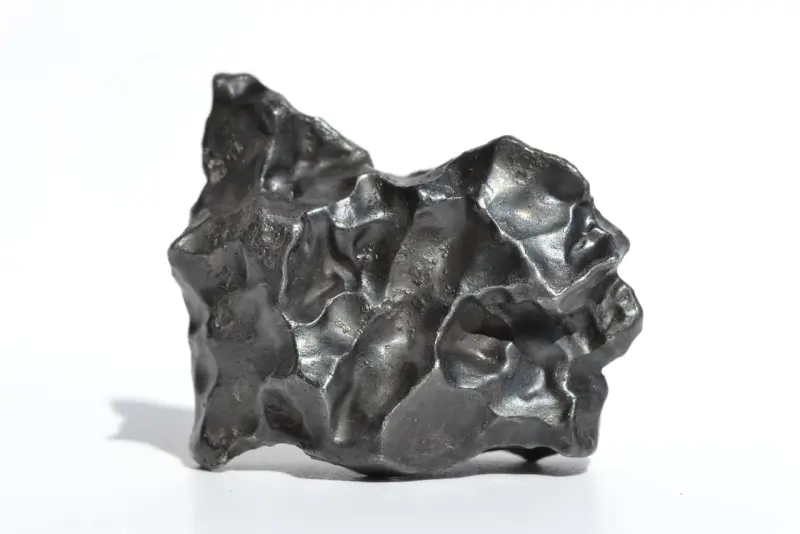
 Meteorites
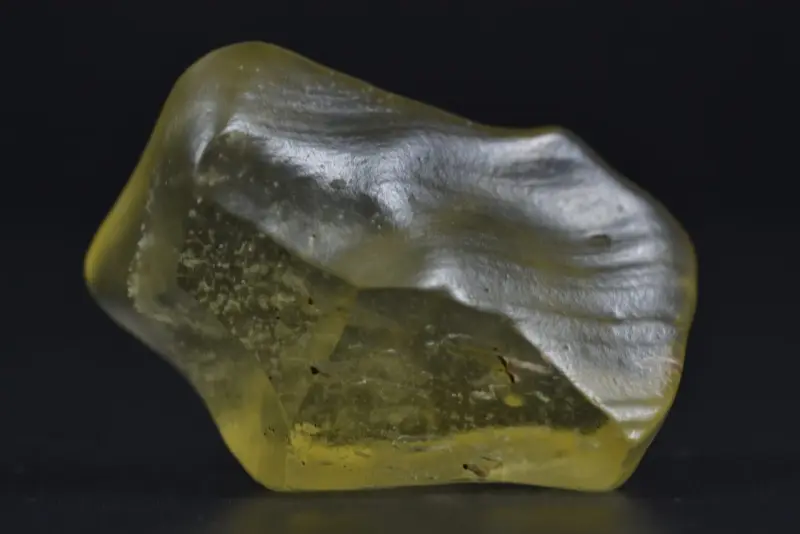 Libyan Desert Glass
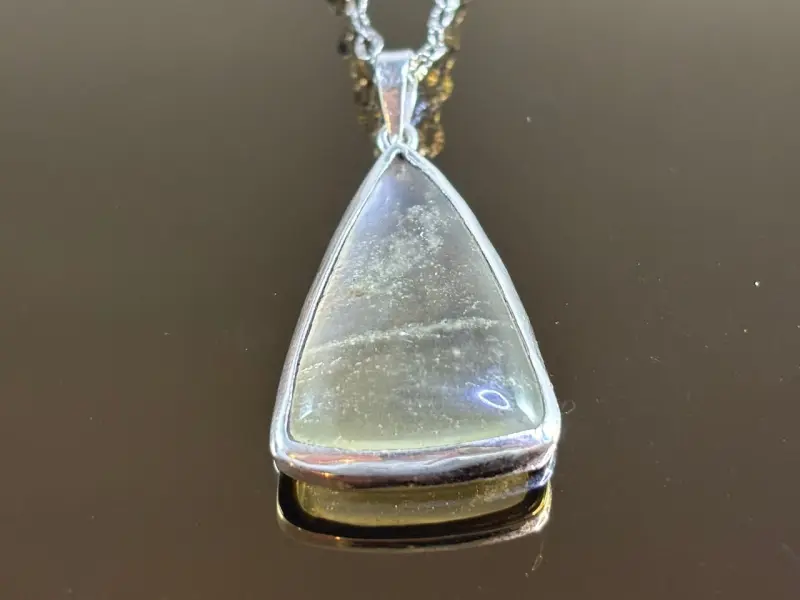 Jewelry
How to spot a fake meteorite
A collector's field guide: six checks, the usual lookalikes and four questions to ask before you buy.
Meteorites are far rarer than people expect, and imitations far more common. Industrial slag, volcanic stones and weathered Earth rocks are often sold as "space rock". Most are not deliberate fakes, but once a misidentified stone enters a collection, its story is lost. These are the checks I use before a piece goes into our collection. Thomas
Six checks at a glance
Fusion crust
A fresh meteorite has a thin black or brown crust from burning through the atmosphere. It is often covered in shallow "thumbprints" (regmaglypts), never in round holes or bubbles.
A magnet
Most meteorites contain iron-nickel metal and attract a magnet. Many lookalikes do too, so a magnet alone proves nothing.
No bubbles
Gas holes (vesicles) point to slag or volcanic rock. Meteorites are dense and solid.
Weight
Meteorites feel heavy for their size, especially irons.
Streak test
Rub the stone on unglazed ceramic. Hematite leaves a red-brown streak and magnetite a dark grey one; most meteorites leave little or no streak.
Inside
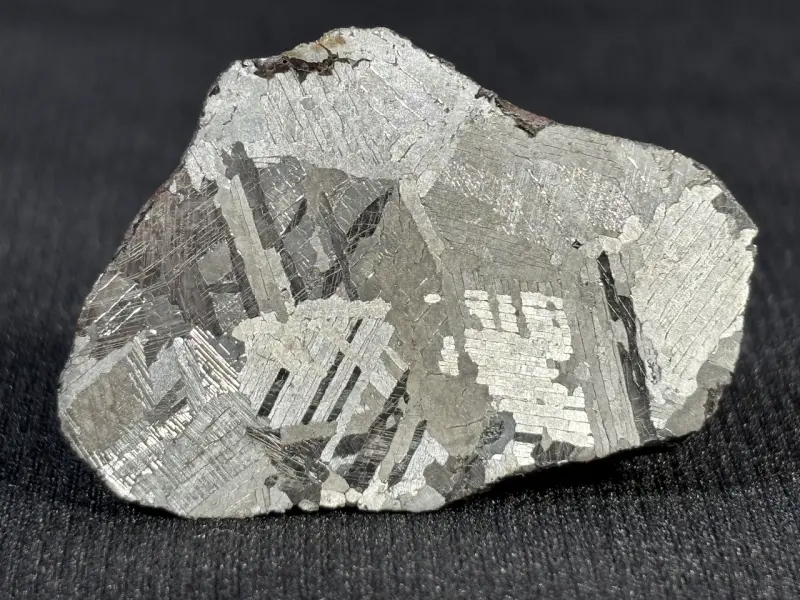
A cut or polished face shows metal flecks and, in chondrites, small round chondrules. Iron meteorites show the Widmanstätten pattern when etched.
The usual suspects
Industrial slag. Glassy or metallic, often full of gas bubbles, and sometimes with rust. What it lacks is coherence: bubbles where there should be none, a weight that feels wrong, magnetism that comes and goes.
Magnetite and hematite. Heavy and dark, and magnetite pulls a magnet hard. The streak gives them away: dark grey for magnetite, red-brown for hematite.
Basalt and volcanic rock. Dark and sometimes magnetic, but usually lighter than a meteorite and often full of small holes.
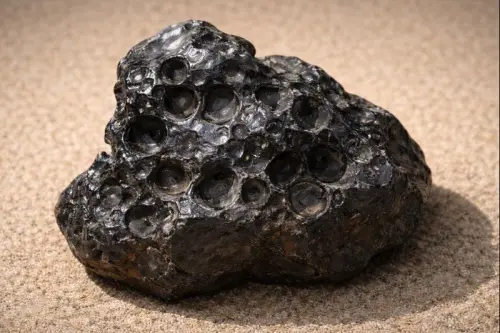
What the real thing looks like
Iron meteorites
Often the most immediately convincing: heavy, magnetic and enduring. Many reveal intricate internal patterns when cut and etched, structures that cannot be made artificially.
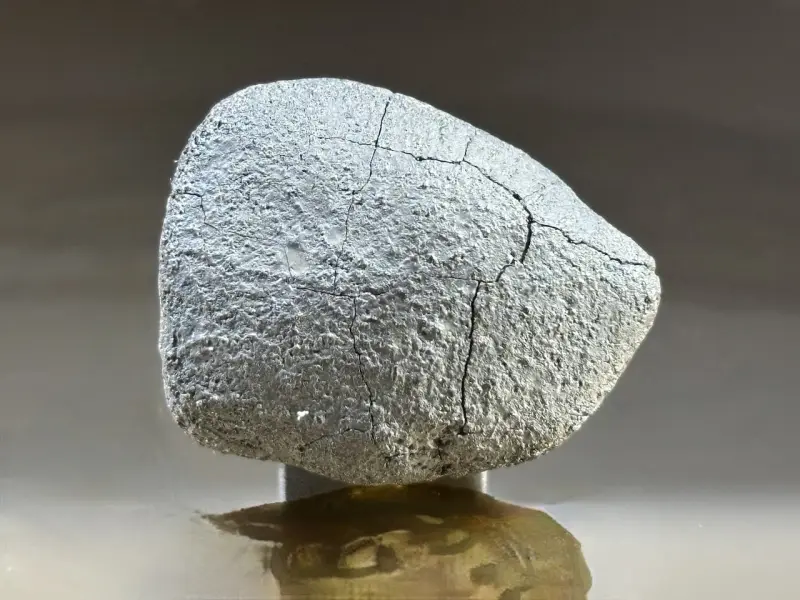
Stony meteorites
Quieter in appearance but no less significant. Their value often lies in subtle textures, such as small round chondrules, rather than visual drama.
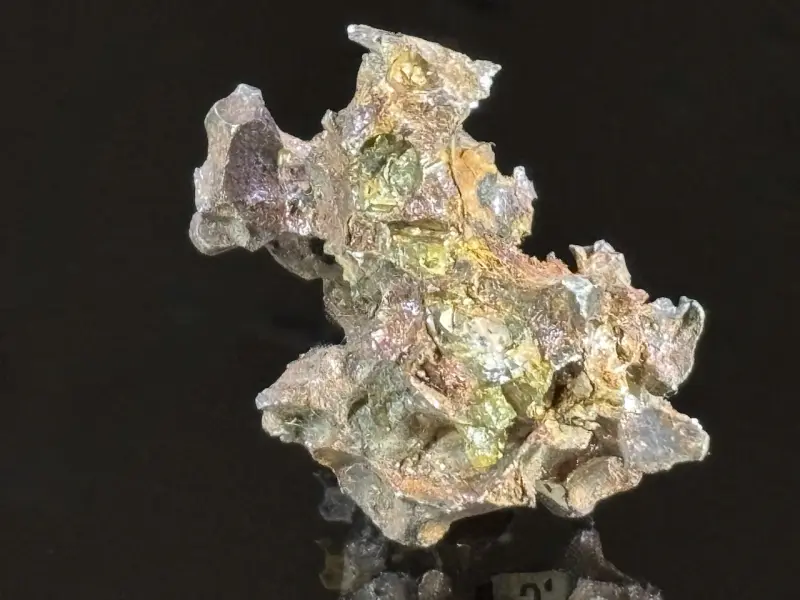
Pallasites
Among the rarest: translucent olivine crystals suspended in iron, perhaps the closest thing we have to holding a planet's interior.
Four questions before you buy
- Where does it come from?
- There should be a clear trail: where it was found, when it entered a collection and how it has been handled since. Written documentation, old collection labels or reliable seller records carry real weight.
- Do the physical signs agree?
- Weight, magnetism, surface and inside should support one another. A stone that is strongly magnetic but unusually light, or looks metallic yet has gas bubbles, raises immediate questions.
- Is it classified?
- For higher-value pieces, formal classification may exist: chemical analysis, nickel testing or a thin section examined by specialists. Not every real meteorite is classified, but when scientific data is there, it speaks clearly.
- Who is selling it?
- Reputable dealers share provenance, photographs and context without hesitation. Members of the International Meteorite Collectors Association (IMCA) are bound by a code of ethics that requires accurate description and honest disclosure.
Your checklist
- Thin fusion crust, no bubbles or round holes
- Heavy for its size
- Attracts a magnet (but that alone proves nothing)
- Little or no streak on unglazed ceramic
- Metal flecks or chondrules on a cut face
- A known find place or collection history
- A seller who answers questions and gives a certificate