
 Meteorites
 Libyan Desert Glass
 Jewelry
Types of Meteorites Explained: Stones, Irons and Pallasites
There are three main types of meteorites: stony meteorites, iron meteorites and stony-iron meteorites. Stony meteorites are by far the most common, about 94 percent of the meteorites seen to fall. Irons make up about 5 percent and stony-irons, including the beautiful pallasites, only about 1 percent. Each family comes from a different part of an asteroid, and each looks, feels and behaves differently in a collection.
When I bought my first meteorites at a mineral show in Bern in 2008, I did not know a chondrite from a pallasite. Since then I have searched for meteorites in the Swiss Jura with the Twannberg team and visited the laboratories at the University of Bern where meteorites are classified. This is the overview I wish someone had given me on that first day.
- Chondrites
- Achondrites
- Octahedrites
- Hexahedrites
- Ataxites
- Pallasites
- Mesosiderites
Stony meteorites
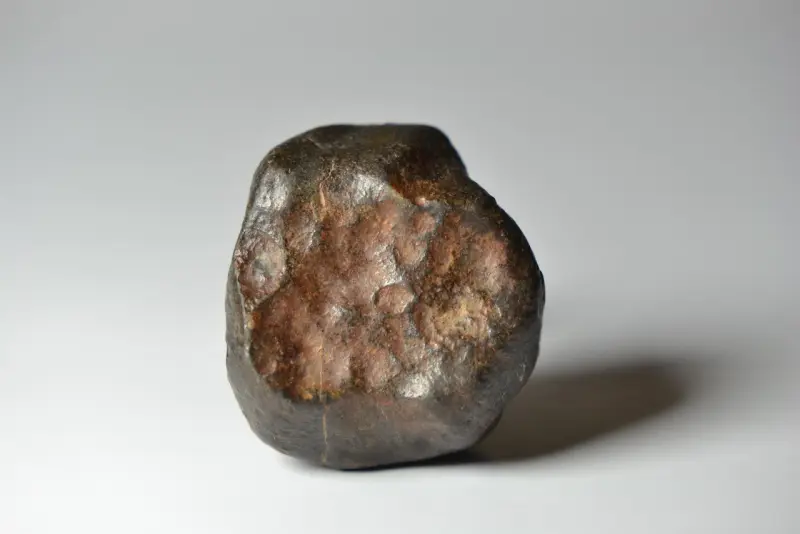
Stony meteorites are made mostly of silicate minerals, the same family of minerals that makes up most rocks on Earth. That is exactly why they are hard to recognise in a field: from the outside, a weathered stony meteorite can look like an ordinary stone. Look closer and most of them contain small flecks of iron-nickel metal, so they are heavier than they look and attract a magnet.
Chondrites: the oldest rocks you can hold
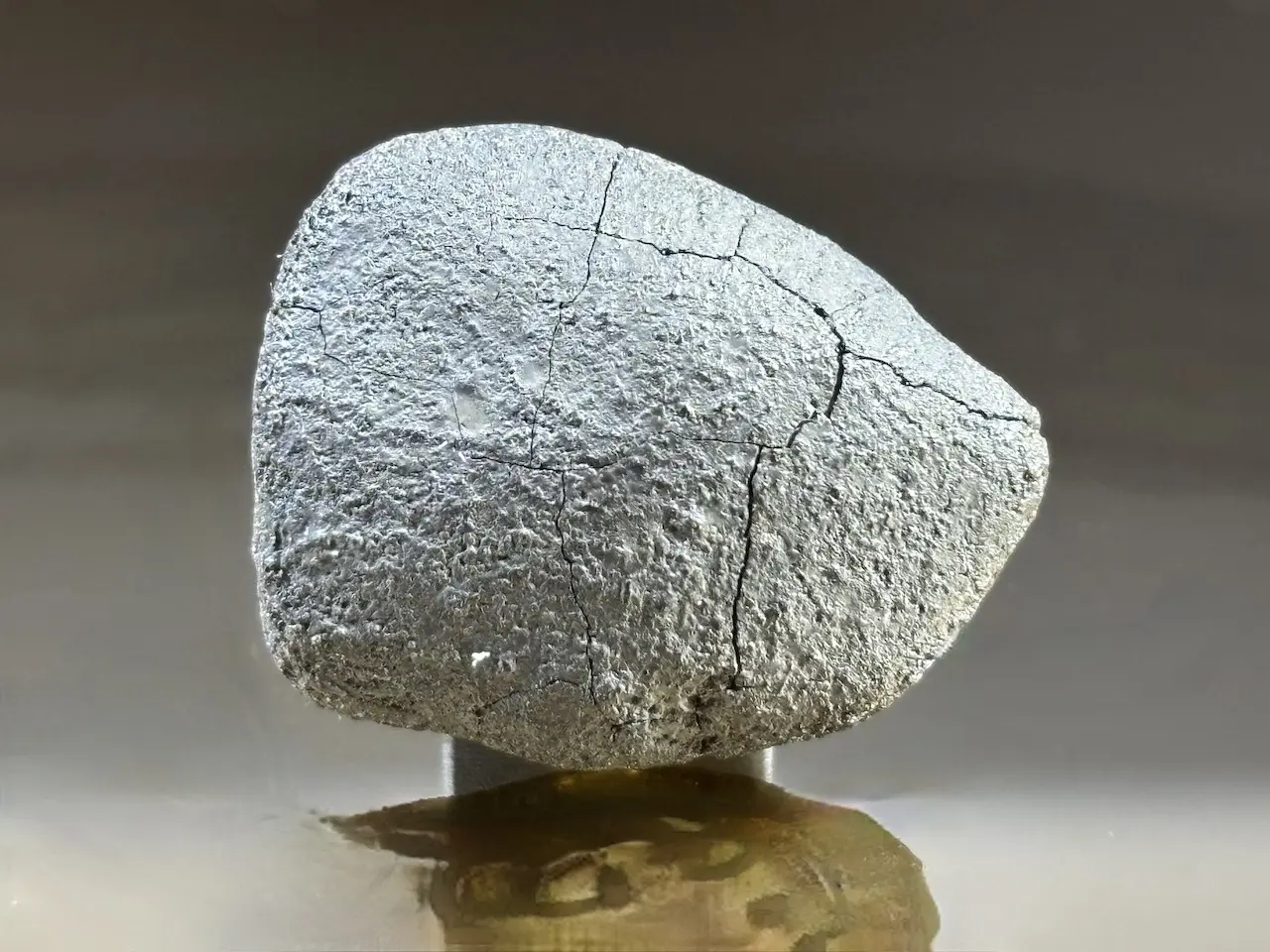
Most stony meteorites are chondrites. Their name comes from chondrules: round grains, usually a millimetre or so across, that were once molten droplets floating in the cloud of dust and gas around the young Sun, about 4.56 billion years ago. Chondrites come from asteroids that never melted, so they have stayed almost unchanged since the solar system formed. On a cut and polished slice you can see the chondrules with the naked eye.
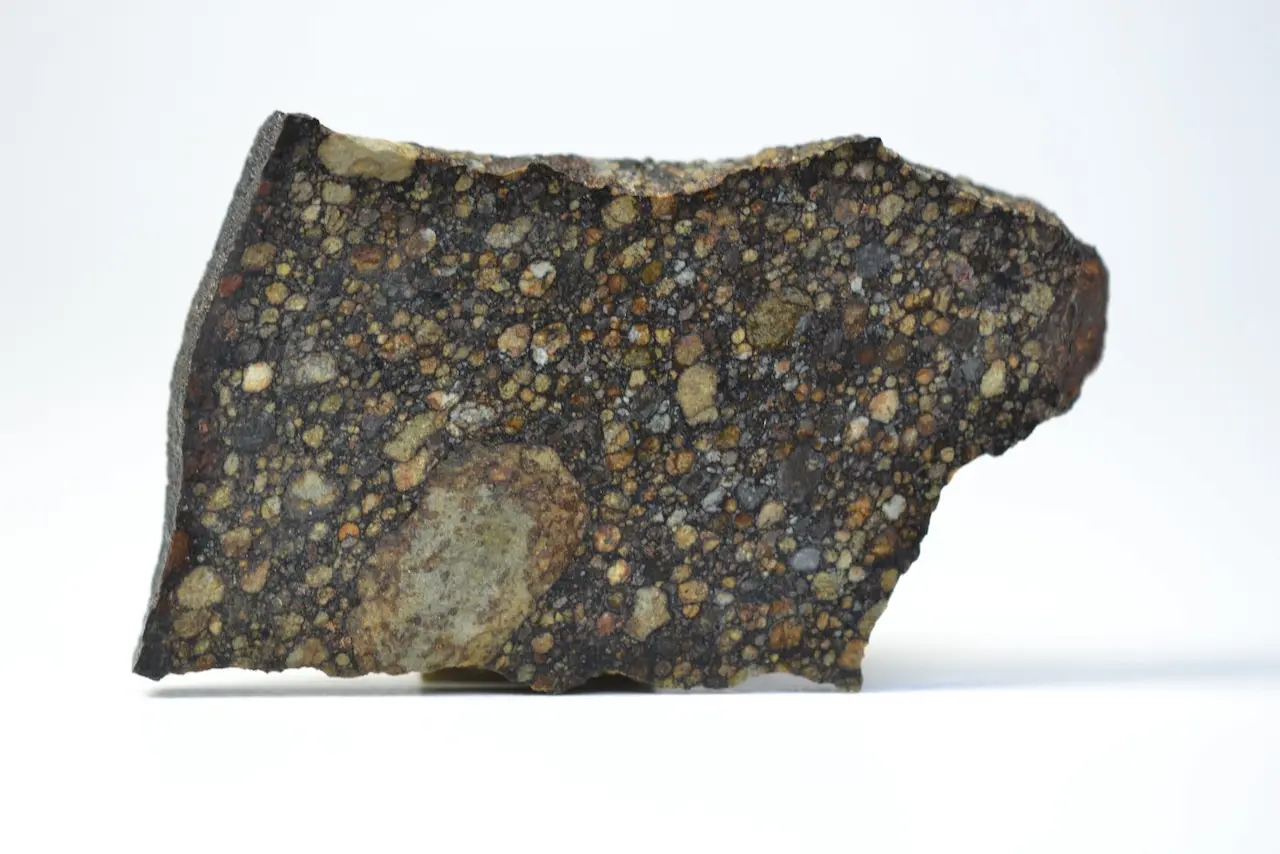
Scientists sort chondrites into groups. The ones you will meet most often are the ordinary chondrites, labelled H, L and LL according to how much iron they contain, followed by a number (usually from 3 to 6) that tells you how much the rock was heated on its asteroid. The Chelyabinsk meteorite, which exploded over Russia on 15 February 2013, is an LL5 chondrite. Rarer and very popular with collectors are the carbonaceous chondrites, dark meteorites that contain water-bearing minerals and organic compounds, such as Allende, which fell in Mexico in 1969.
Achondrites: pieces of melted worlds
Achondrites have no chondrules, because their parent body melted and separated into layers, much like the Earth. They include meteorites from the asteroid Vesta and the rarest stones of all: meteorites from the Moon and from Mars, blasted off their surfaces by impacts. Only a few hundred lunar and Martian meteorites are known.
Iron meteorites
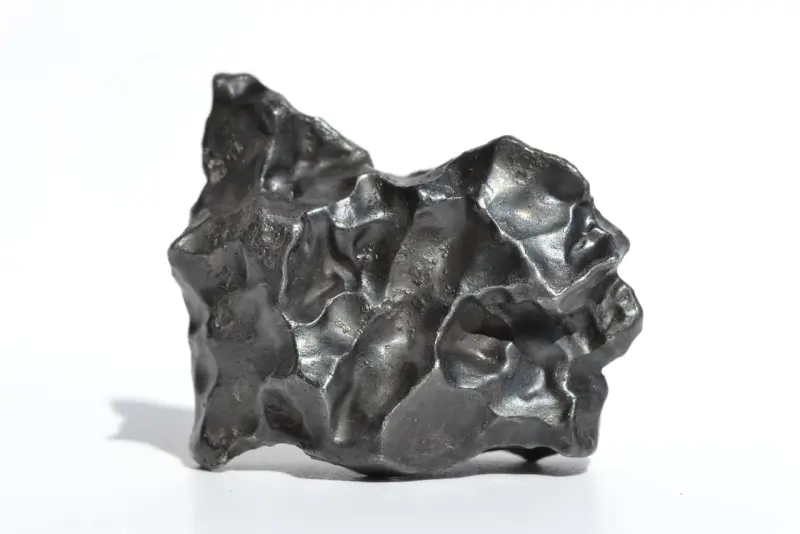
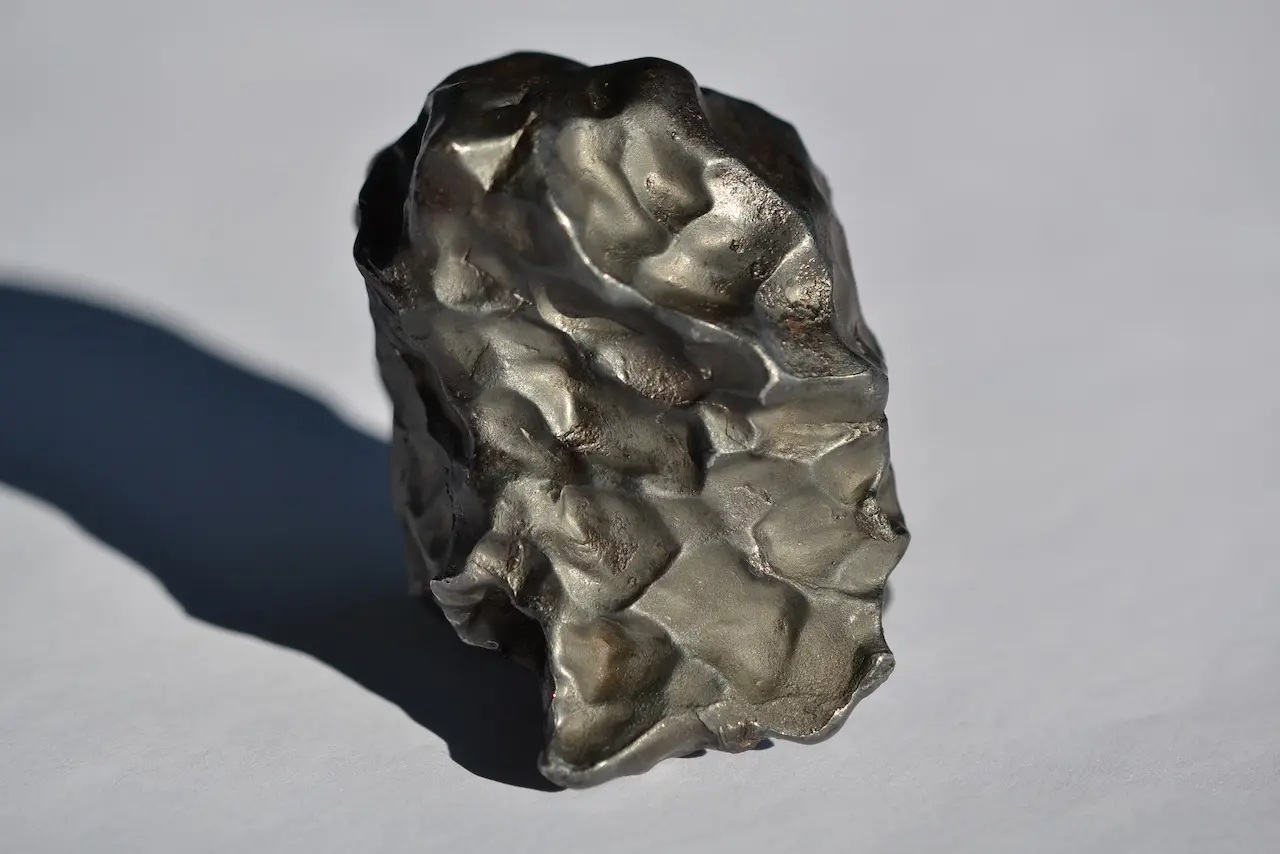
Iron meteorites are pieces of the metal cores of asteroids that melted, separated into layers and were later shattered by collisions. They are made of iron alloyed with nickel, usually between about 5 and 30 percent, and they are the meteorites most people imagine: heavy, dark, strongly magnetic and often covered in shallow "thumbprints" called regmaglypts, which form as the surface melts on the way down.
The Widmanstätten pattern
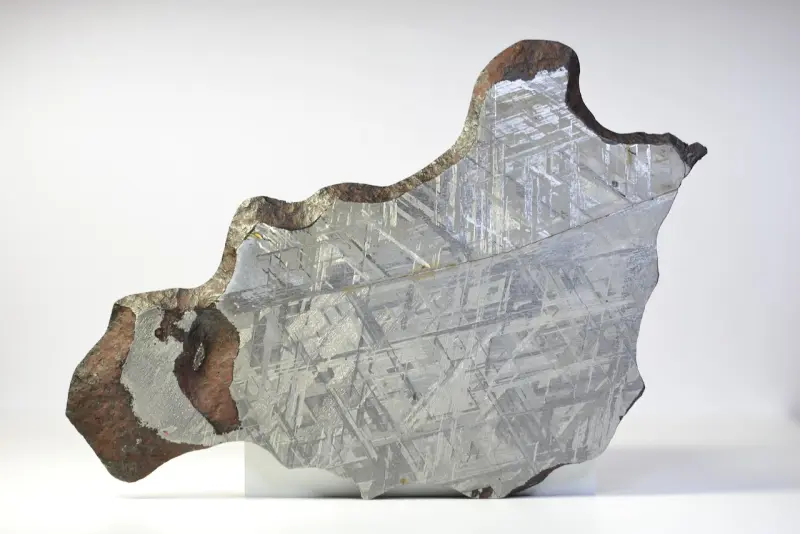
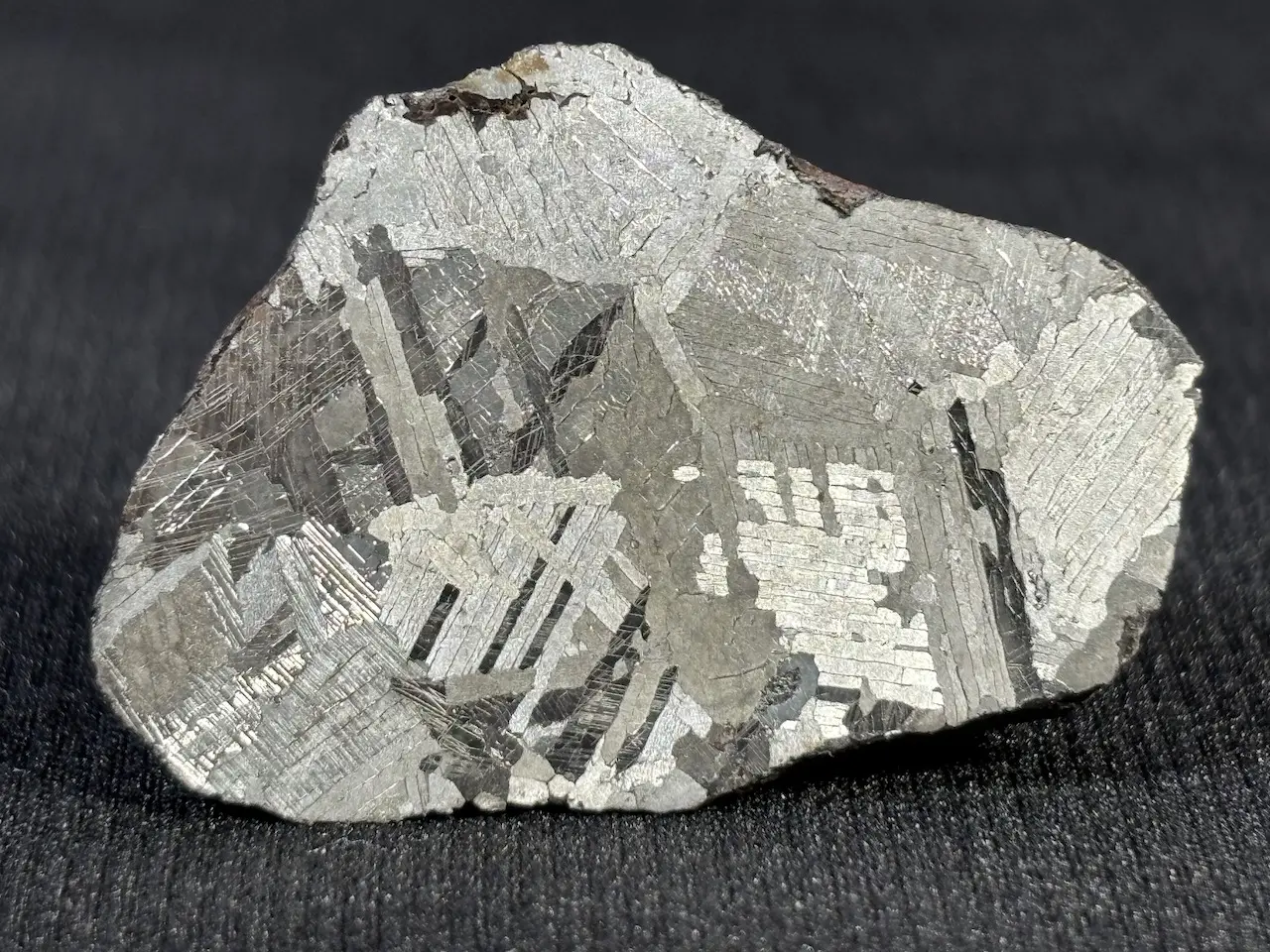
Cut an iron meteorite, polish the face and etch it with a weak acid, and many of them show a criss-cross pattern of metal bands called the Widmanstätten pattern. It forms only when the metal cools extremely slowly, over millions of years inside an asteroid core. No furnace on Earth can reproduce it, which makes it one of the surest signs of a genuine iron meteorite.
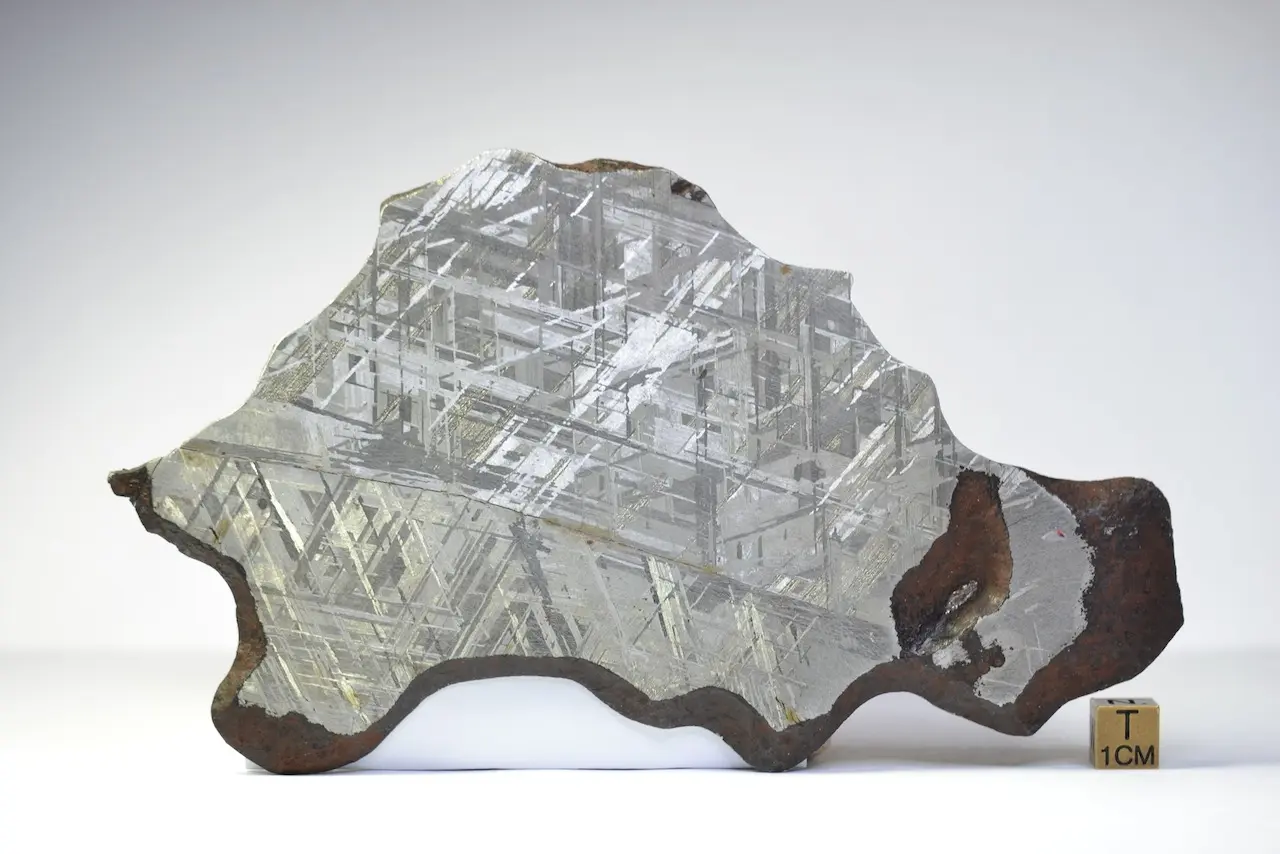
Irons are grouped by this structure. Octahedrites show the Widmanstätten pattern, from coarse to very fine bands. Hexahedrites have almost no pattern, only fine parallel lines. Ataxites, rich in nickel, show no pattern at all. Famous irons include Sikhote-Alin, which fell in eastern Russia in 1947 in one of the largest falls ever witnessed, and Twannberg in Switzerland, which belongs to a very rare chemical group and which I spent several years searching for (you can read about it in our Twannberg story).
Stony-iron meteorites
Stony-irons are roughly half metal and half silicate, and they are the rarest of the three families.
Pallasites
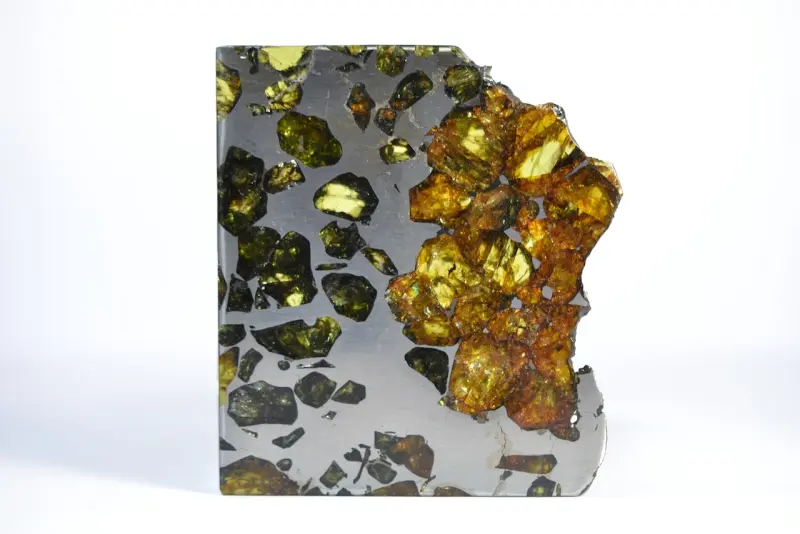
Pallasites are many collectors' favourite meteorites: golden-green olivine crystals (the gem form of olivine is peridot) set in a web of iron-nickel metal. Cut into thin slices and lit from behind, they glow like stained glass. They are thought to come from deep inside asteroids, where the metal core met the rocky mantle.
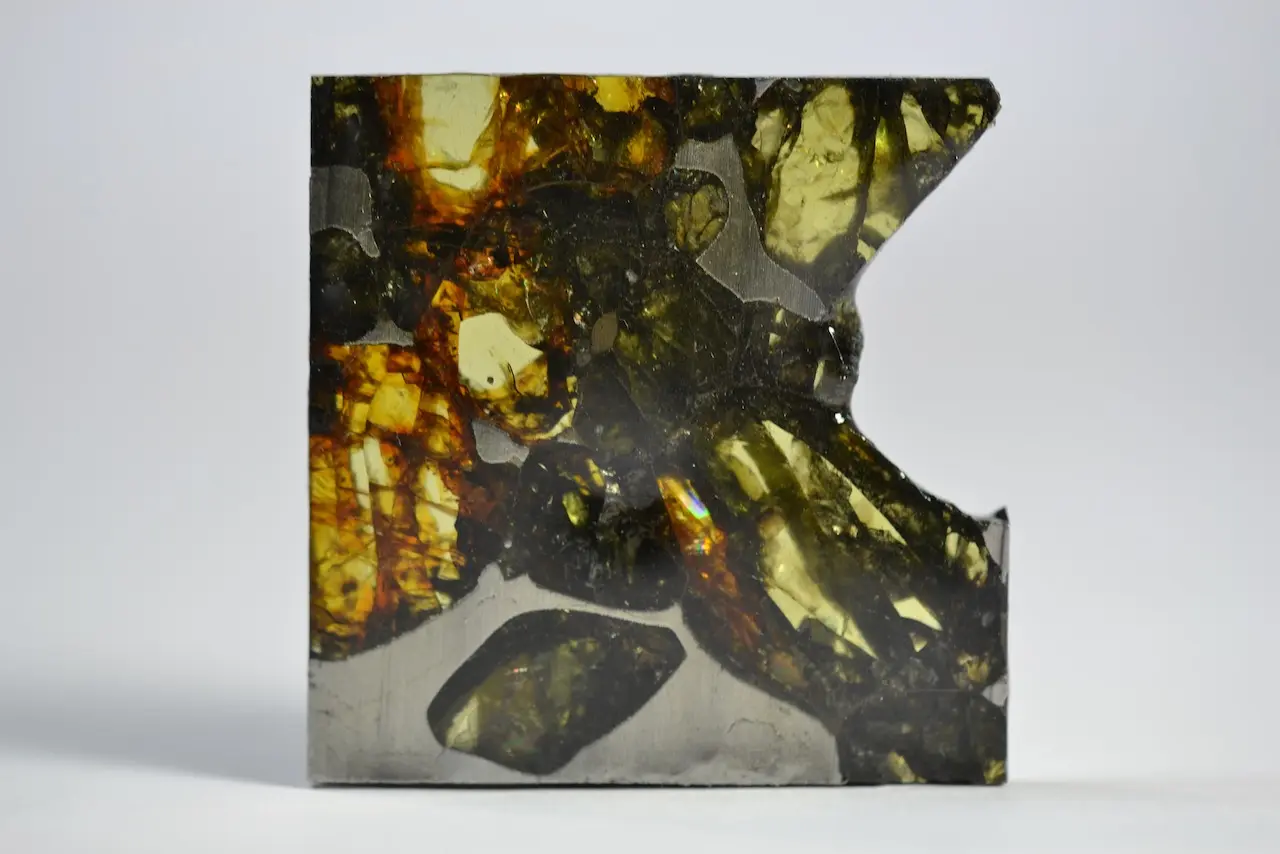
The family is named after the German naturalist Peter Simon Pallas, who examined a large mass of iron and olivine in 1772. It had been found in 1749 near Krasnoyarsk in Siberia. That meteorite, Krasnojarsk, was the first pallasite known to science, and pieces of it are still treasured in collections today.
Mesosiderites
Mesosiderites are a jumble of metal and broken rock, welded together by ancient collisions. They are less showy than pallasites, but cut and polished they show a striking patchwork of silver and grey.
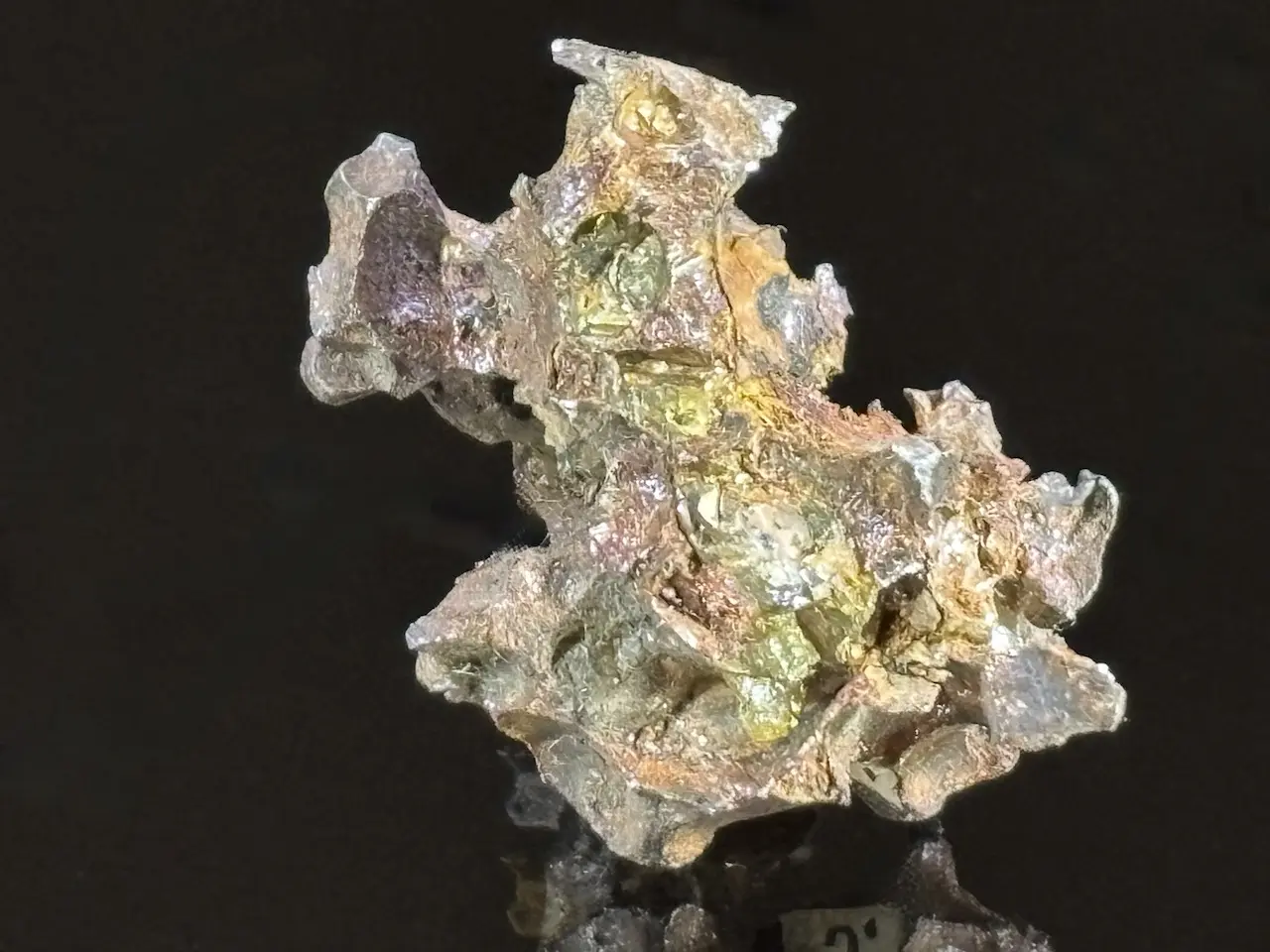
Three classics, side by side
Which type should you collect?
- For a first meteorite: an iron individual or an etched iron slice. They are robust, unmistakable and satisfying to hold.
- For the story of the solar system: a chondrite slice, where you can see the chondrules for yourself.
- For sheer beauty: a pallasite slice, ideally displayed in front of a light.
- For something truly rare: a lunar or Martian fragment, even a small one.
Whatever you choose, ask for the classification. A good listing tells you the type, the name where there is one, the weight and where it was found or fell. If you are unsure whether a stone is a meteorite at all, read how to identify a real meteorite.
Questions collectors ask
What is the most common type of meteorite?
Ordinary chondrites, a kind of stony meteorite. They make up the large majority of meteorites seen to fall.
What is the rarest type of meteorite?
Among the main families, stony-irons such as pallasites are the rarest. Among individual groups, meteorites from Mars and the Moon are rarer still.
Are all meteorites magnetic?
Almost all. Irons are strongly magnetic and most stony meteorites contain enough metal to attract a magnet. A few achondrites contain very little metal and barely react.
You will find all three families in our meteorite collection, each with its classification where known and a Certificate of Authenticity. If you want a particular type, tell me what you are looking for and I will check our stock and my contacts.

Thomas, founder of SaharaGems. Collecting Libyan Desert Glass since 2000 and meteorites since 2008. IMCA member No. 8629 and part of the Twannberg meteorite search team. Our story