
 Meteorites
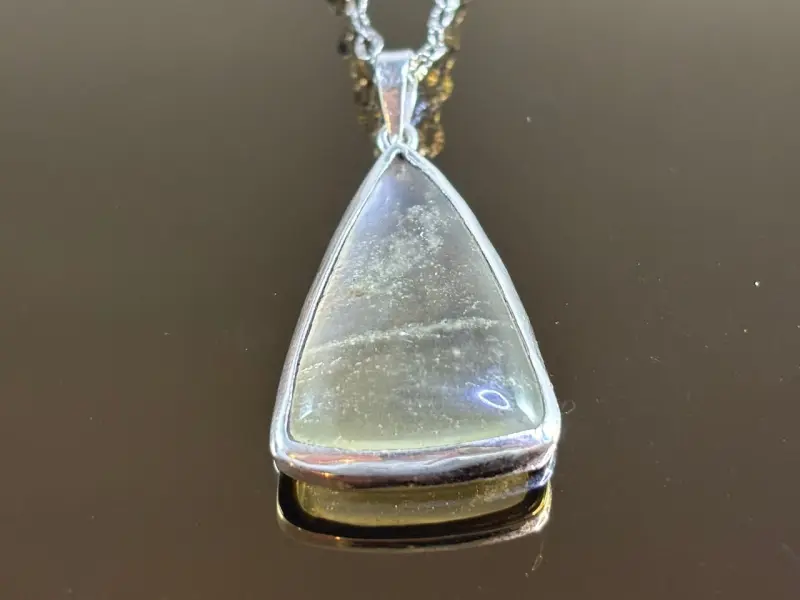 Jewelry
What Is Libyan Desert Glass? Where It Comes From and How to Tell It Is Real
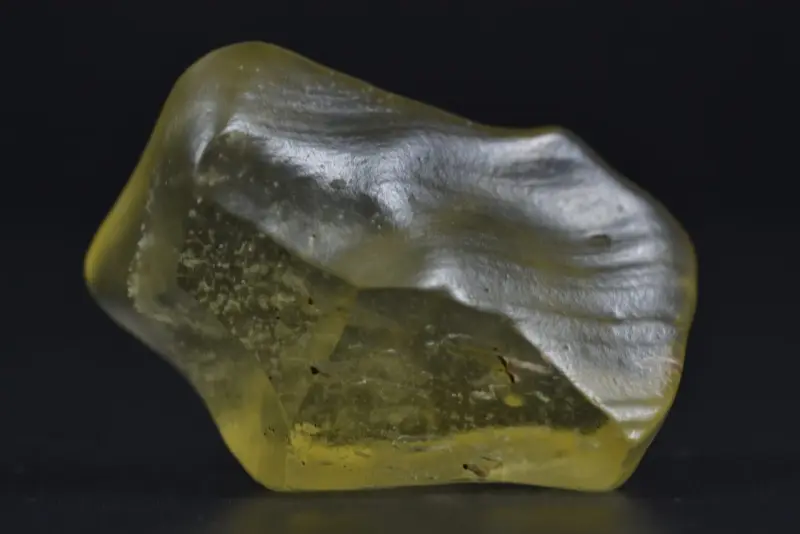
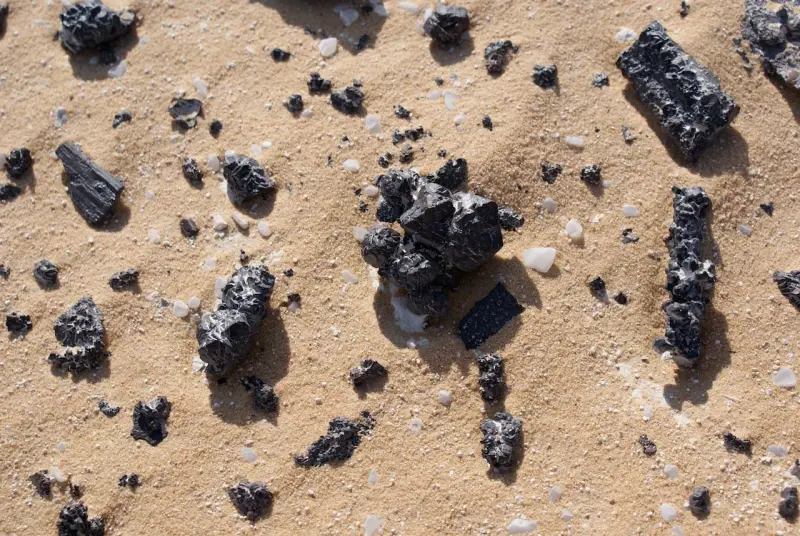
Libyan Desert Glass is a natural, pale yellow glass found in only one place on Earth: the Great Sand Sea of Egypt's Western Desert, close to the Libyan border. It formed about 29 million years ago, when the heat of a cosmic impact melted the desert sand, and it is almost pure silica. The pharaohs carved it, Stone Age people made tools from it, and scientists are still arguing about exactly what hit the desert that day.
I started collecting Libyan Desert Glass in 2000, while I was living in Cairo, and it is still the stone I am asked about most. This article answers the questions I hear every week: what it is, where it comes from, why it looks the way it does, and how to tell a real piece from the bottle glass and resin that are sold under its name.
Where Libyan Desert Glass is found
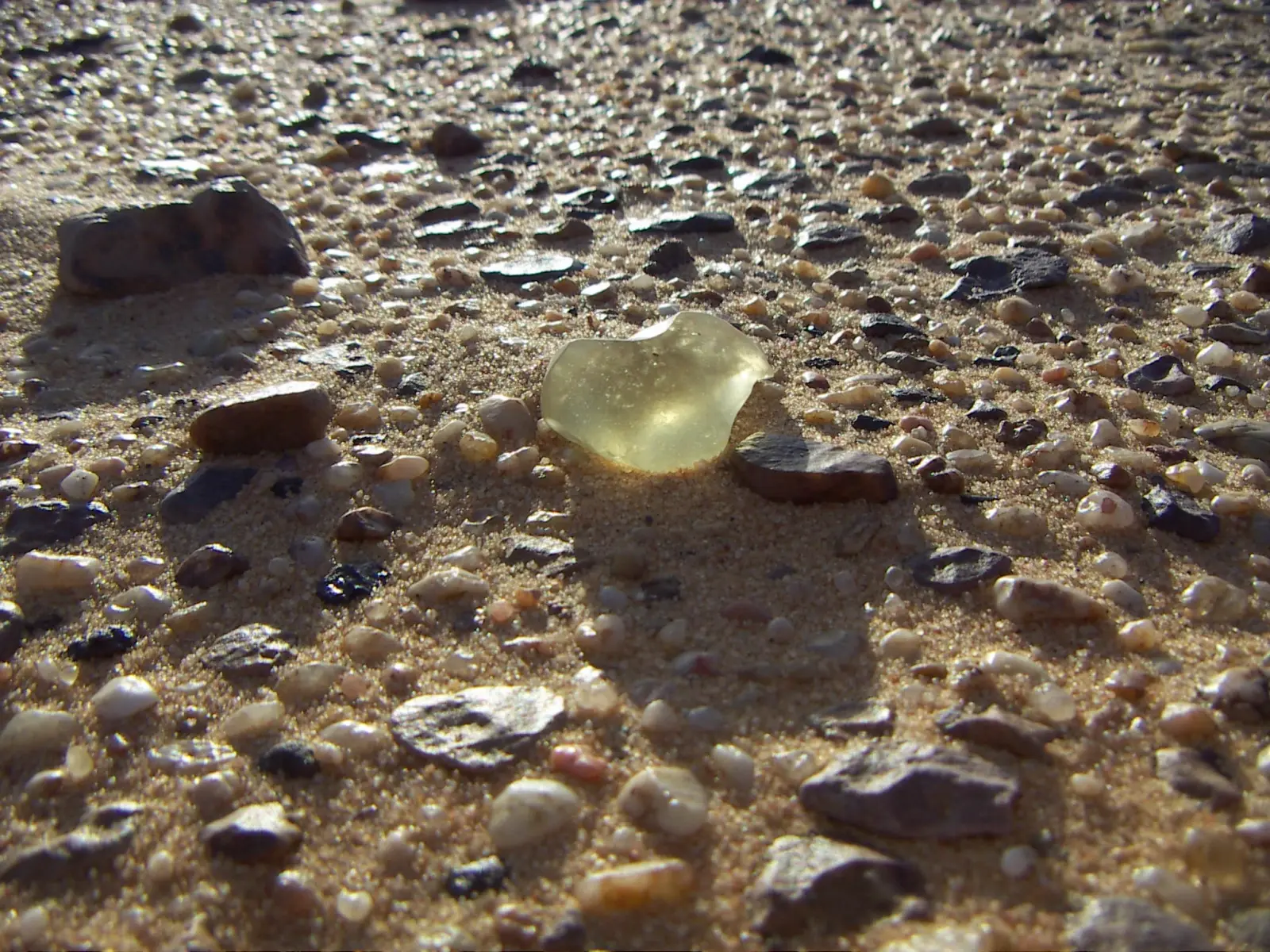
The glass lies scattered in the corridors between the long dunes of the Great Sand Sea, in the far south-west of Egypt. It is one of the emptiest places on the planet: no roads, no water and hundreds of kilometres of sand in every direction. Despite the name, almost all of it is found on the Egyptian side of the border. It is called "Libyan" because this part of the Sahara has long been known as the Libyan Desert.
Western science only noticed the glass in 1932, when the British surveyor Patrick Clayton came across it while mapping the Great Sand Sea. People had found it long before him. Archaeologists have collected scrapers and blades knapped from desert glass in the same area, made by Stone Age people who valued it for the same reason flint was valued: it breaks with a sharp edge.
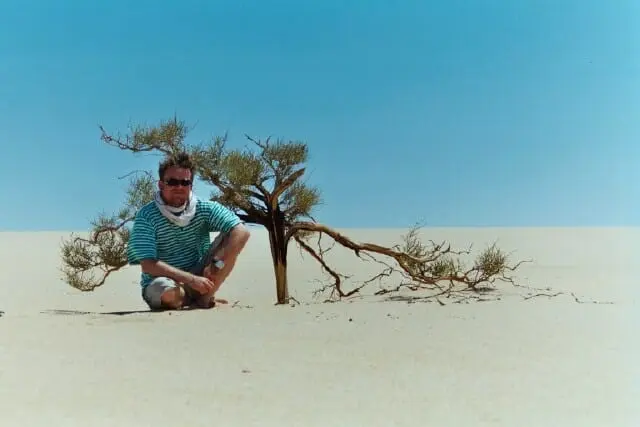
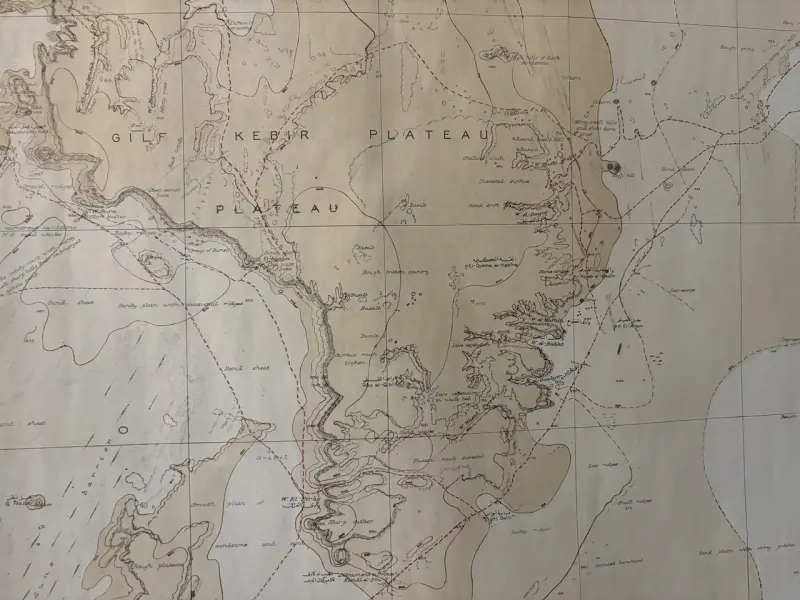
In 2002 I travelled to the Gilf Kebir plateau, a 14-day journey of almost 2,000 kilometres off-road, and on the way back our route crossed the Libyan Desert Glass strewn field in the Great Sand Sea. We walked the dune corridors among the sparkling fragments, and that night we compared the pieces we had found around the campfire. I wrote about the whole journey in our Gilf Kebir expedition story. Today, trips into this area are prohibited by the Egyptian authorities.
How did it form?
To turn sand into glass you need temperatures far above anything a desert produces on its own, well over 1,600 °C. That is why scientists agree the glass was made by something arriving from space. What they have debated for decades is how:
- An impact. A meteorite or comet struck the ground and melted the sand around it. No crater of the right age has been found under the dunes, which kept the debate open.
- An airburst. A large object exploded in the air above the desert, like the one over Tunguska in Siberia in 1908, and the heat of the fireball melted the sand below.
In 2019, researchers studying tiny zircon grains inside the glass found evidence of reidite, a mineral that forms only under the enormous pressure of an impact on the ground. For many scientists that tipped the balance towards an impact, but the question is not fully closed. Either way, every piece is the product of a single violent moment about 29 million years ago.
Some pieces carry a fingerprint of that moment: dark streaks and swirls which, in studies of the glass, have been found to contain traces of meteoritic material.
What real Libyan Desert Glass looks like
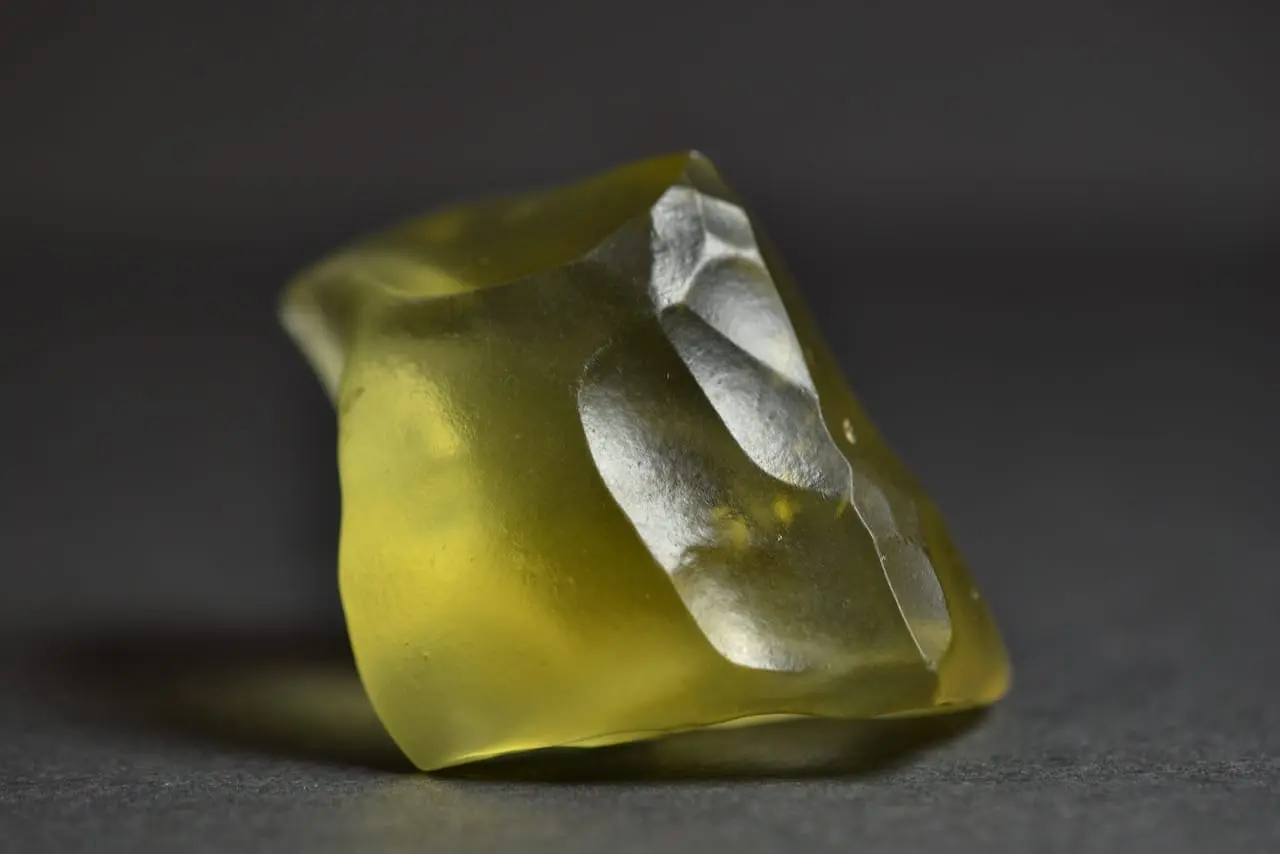
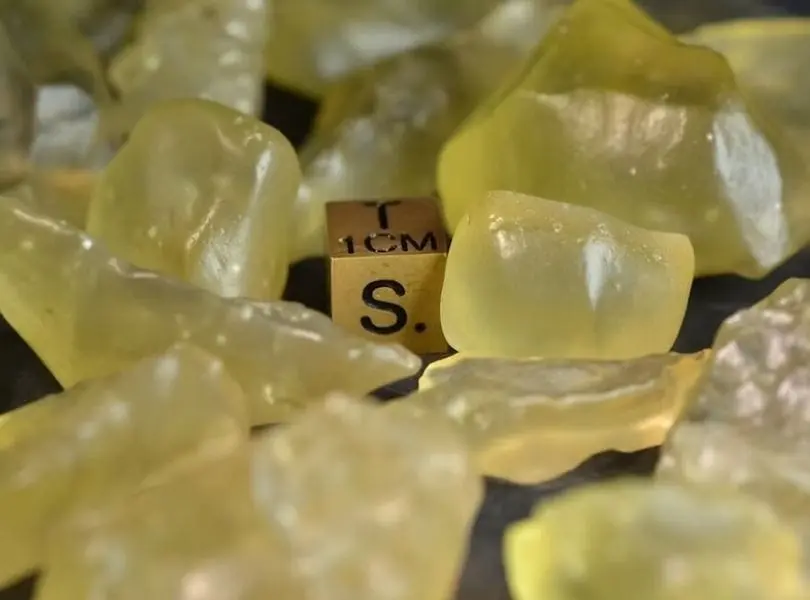
After 25 years of handling it, I recognise it by a combination of features. No single feature proves a piece is real, but together they are very hard to fake:
- Colour. Pale lemon yellow to yellow-green, sometimes almost colourless or milky white. It is never strongly green, which is the first difference from moldavite.
- A frosted, wind-blasted skin. Millions of years of sandstorms have polished and pitted the surface. Natural pieces often show smooth, shallow scoops where the wind did its work.
- Bubbles. Small, round bubbles are common, often in lines or clusters. Very large, perfectly round bubbles in a clear piece are worth a second look.
- Swirls and inclusions. Flow lines, white cristobalite spots and the dark streaks mentioned above.
- Feel. It is glass: cool to the touch, hard enough to scratch window glass (about 6 on the Mohs scale) and with a sharp, shell-like fracture.
How to spot fake Libyan Desert Glass
Because it is beautiful and rare, Libyan Desert Glass is copied. The fakes I see most often fall into three groups:
- Tumbled bottle or industrial glass. It can have the right colour, but it looks too uniform: no flow lines, no inclusions and a skin that is evenly tumbled rather than wind-carved.
- Resin. Resin feels light and warm in the hand, scratches easily with a steel blade and sometimes smells when warmed. Real glass does none of this.
- Coloured glass "carvings". Scarabs and figures moulded from cheap glass, sometimes with the sharp seam of the mould still visible.
The best protection is the seller. Buy from someone who can tell you where the piece came from and who stands behind it in writing. Every piece of desert glass we sell comes with a Certificate of Authenticity, and I am a member of the International Meteorite Collectors Association (IMCA No. 8629).
Tutankhamun's scarab
The most famous piece of Libyan Desert Glass sits in the Egyptian Museum. At the centre of a pectoral (a large chest ornament) found in Tutankhamun's tomb is a winged scarab carved from translucent yellow-green stone. For decades it was described as chalcedony. In the late 1990s, the Italian mineralogist Vincenzo de Michele identified it as Libyan Desert Glass. More than three thousand years ago, someone carried this glass out of the Great Sand Sea to the royal workshops of the Nile valley.
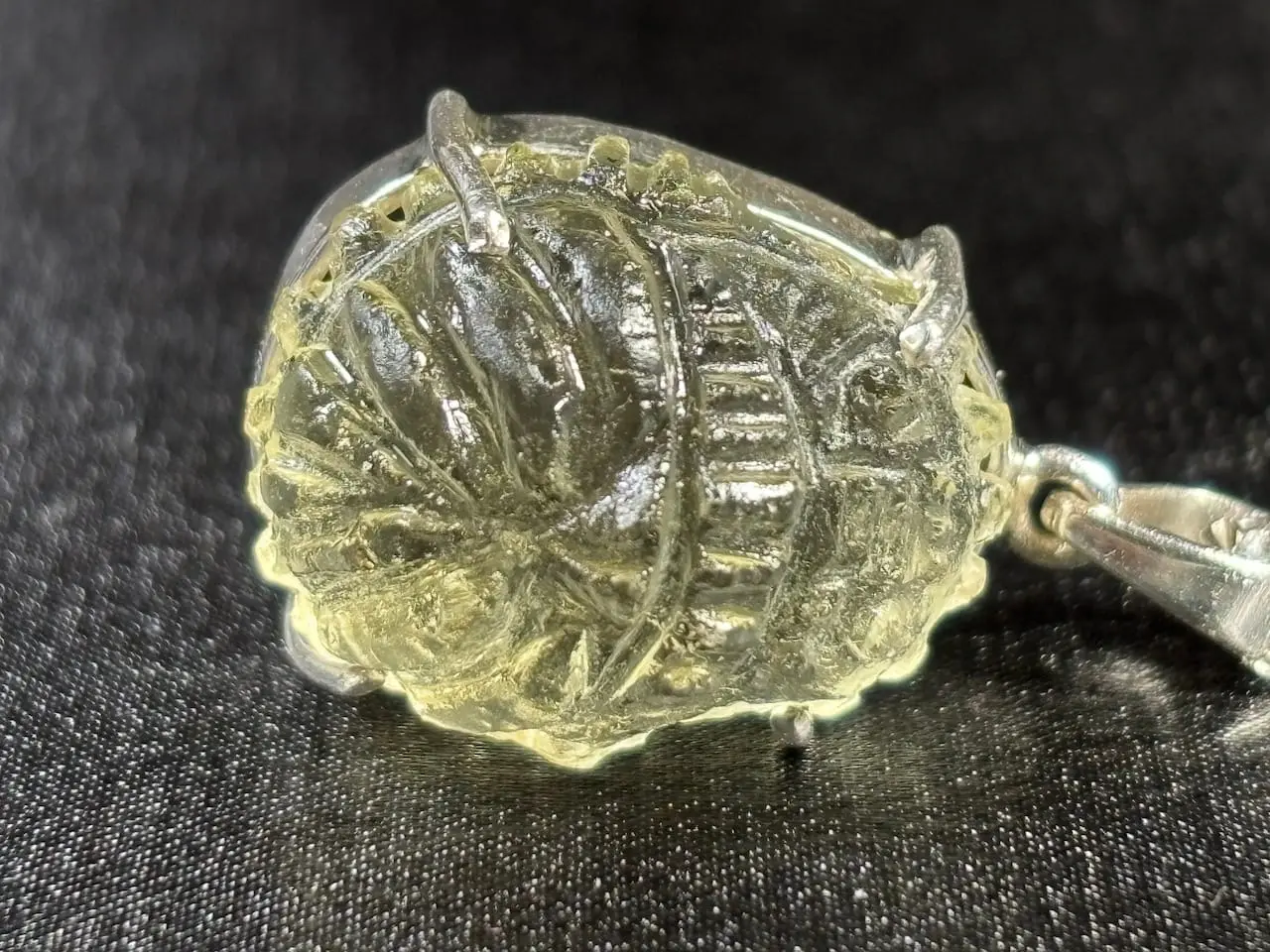
The scarab is why many people ask us for desert glass carvings and desert glass jewelry: wearing the stone the pharaohs chose is a story in itself.
Libyan Desert Glass or moldavite?
Both are natural glasses linked to impacts, and both are popular with collectors, but they are easy to tell apart. Moldavite is bottle-green to olive, about 15 million years old, and found in Central Europe, mainly the Czech Republic. Libyan Desert Glass is yellow, about 29 million years old, and comes only from the Great Sand Sea. Moldavite usually has a deeply sculpted, wrinkled surface; desert glass is smoothed and frosted by the wind.
Questions collectors ask
Is Libyan Desert Glass a meteorite?
No. It is glass made from melted desert sand, not a piece of the object that came from space. But it was created by that object, which is why collectors of meteorites love it.
How old is Libyan Desert Glass?
About 29 million years. The age comes from dating methods that measure how long ago the glass cooled.
Is it legal to buy?
Yes, pieces that left Egypt legally can be bought and sold. Collecting in the area itself is now restricted, which is one reason old collections like ours matter.
How do I clean it?
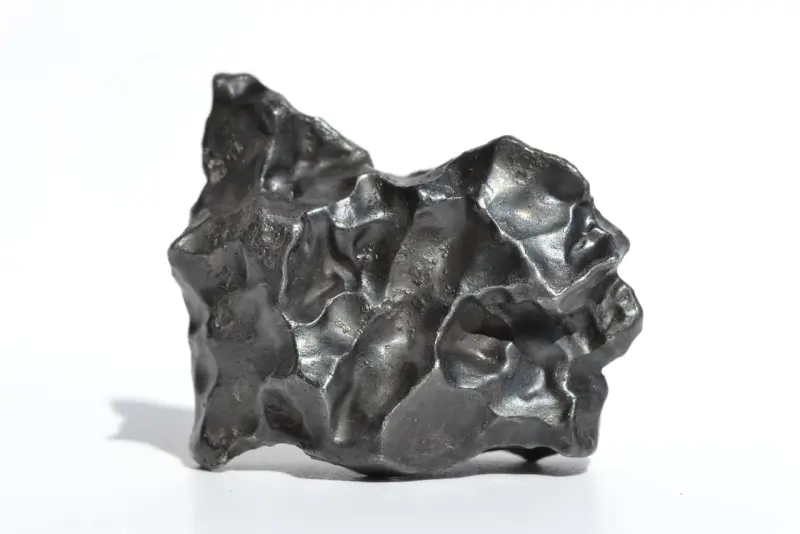
Rinse it in lukewarm water with a drop of soap, use a soft brush in the hollows and let it dry. It is hard and stable, unlike an iron meteorite, which must never be washed. Our guide on looking after a meteorite covers the difference.
If you would like to hold a piece of this story, have a look at our Libyan Desert Glass collection. Every piece is photographed as it is, with its weight, and comes with a certificate. If you are looking for something particular, a gem-quality piece, a large display specimen or a carved scarab, write to me. Some pieces sell directly before they reach Etsy.

Thomas, founder of SaharaGems. Collecting Libyan Desert Glass since 2000 and meteorites since 2008. IMCA member No. 8629 and part of the Twannberg meteorite search team. Our story